


Ref : NISKEN1
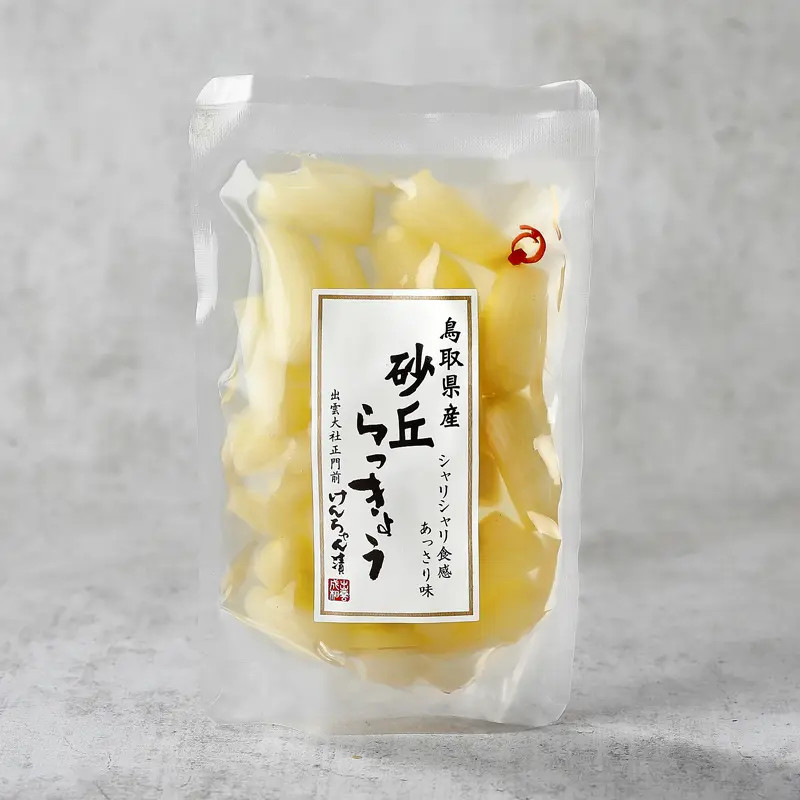
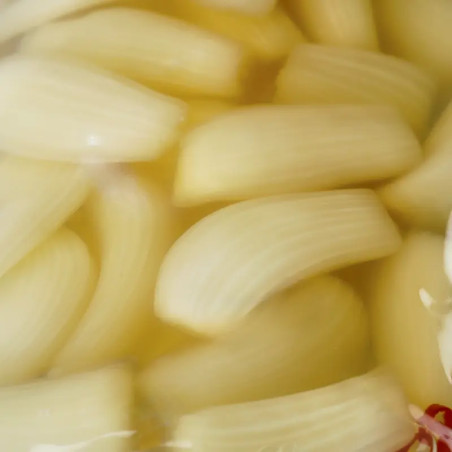
Rakkyo is one of Japan's most popular condiments. Cultivated in China as a medicinal plant in traditional medicine, as well as a condiment, it arrived in Japan in the 9th century. Called a shallot in Japan because of its bulb shape, it is more akin to an onion, vernacular name being Allium Chinense.
Cultivation has developed particularly in the sand dunes of Tottori prefecture, along Japan Sea. This region is particularly windy and snowy in winter, making it ideal for cultivation. Indeed, snow has a reputation for concentrating flavors. Rakkyo are harvested from late May to early June, and bulbs are marinated (lacto-fermented) in sweet and sour vinegar.
They are then called "rakkyo-zuke". Rich in dietary fiber, vitamins and minerals, polyphenols, sulfur and organosulfur compounds, rakkyo are recognized for their medicinal virtues (antibacterial properties, antioxidant activity, anti-inflammatory effects, hypotensive effects, improved immune system...).
They are particularly appreciated for their crunchy texture. Rakkyo are very popular in Japan in conjunction with curries. We recommend them for meat and fish tartars, mixed salads, hot sauces (hot sauce) and cold sauces (mayonnaise), as an accompaniment to smoked or dried fish (mackerel, salmon, halibut, catfish, tuna)...
Data sheet
 Aeryo C.

It's good. (Translated review)
Rakkyo is one of Japan's most popular condiments. Cultivated in China as a medicinal plant in traditional medicine, as well as a condiment, it arrived in Japan in the 9th century. Called a shallot in Japan because of its bulb shape, it is more akin to an onion, vernacular name being Allium Chinense.
Cultivation has developed particularly in the sand dunes of Tottori prefecture, along Japan Sea. This region is particularly windy and snowy in winter, making it ideal for cultivation. Indeed, snow has a reputation for concentrating flavors. Rakkyo are harvested from late May to early June, and bulbs are marinated (lacto-fermented) in sweet and sour vinegar.
They are then called "rakkyo-zuke". Rich in dietary fiber, vitamins and minerals, polyphenols, sulfur and organosulfur compounds, rakkyo are recognized for their medicinal virtues (antibacterial properties, antioxidant activity, anti-inflammatory effects, hypotensive effects, improved immune system...).
They are particularly appreciated for their crunchy texture. Rakkyo are very popular in Japan in conjunction with curries. We recommend them for meat and fish tartars, mixed salads, hot sauces (hot sauce) and cold sauces (mayonnaise), as an accompaniment to smoked or dried fish (mackerel, salmon, halibut, catfish, tuna)...

ALCOHOL ABUSE IS DANGEROUS FOR YOUR HEALTH. CONSUME IN MODERATION. CONSUMING ALCOHOLIC BEVERAGES DURING PREGNANCY, EVEN IN SMALL QUANTITIES, CAN HAVE SERIOUS CONSEQUENCES FOR THE HEALTH OF THE CHILD.


FAQ