







Ref : NISAMNS4
Kombu seaweed is found in many countries around the globe, including Japan, Russia, China, Tasmania, Australia, South Africa, the Scandinavian Peninsula and Canada. In Japan, most kombu is harvested in Hokkaido, accounting for around 90% of total production.
Glacial Arctic Ocean waters that drift from Siberia to Hokkaido are rich in minerals and provide an environment that produces delicious kombu. Equipment used in Japan to dry kombu seaweed in the sun meets the most exacting sanitary standards, making Japanese kombu particularly popular worldwide.
Kombu seaweed from Hokkaido has long been distributed throughout Japan, and represents a major commercial challenge. Kombu seaweed harvested in Hokkaido used to be transported by boat, moving west along Sea of Japan coast to Osaka, a commercial center since that time.
For this reason, kombu seaweed wholesalers and processors are mainly located in or around Osaka. Kombu routes takes from Hokkaido to its destination is called the Kombu Route. It extends as far as China via Okinawa.
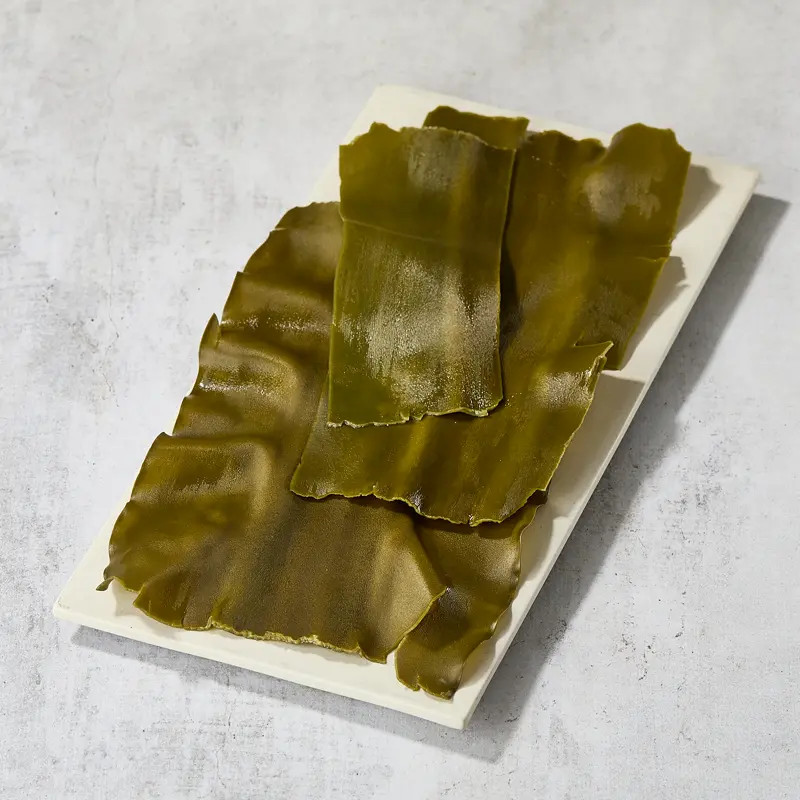
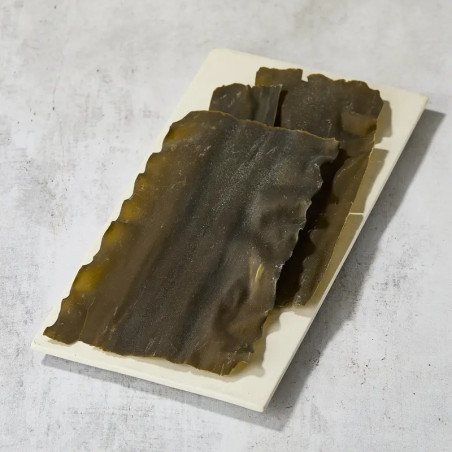
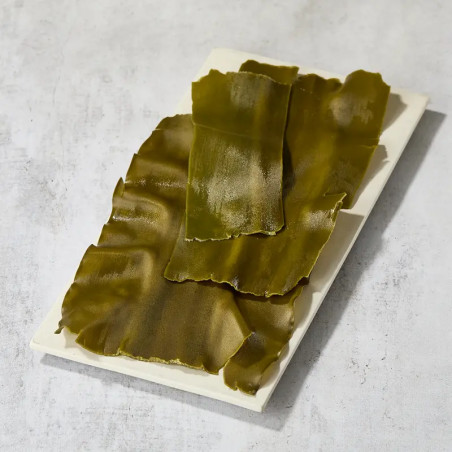
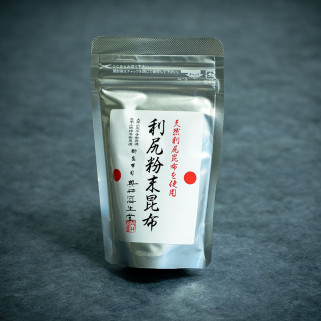
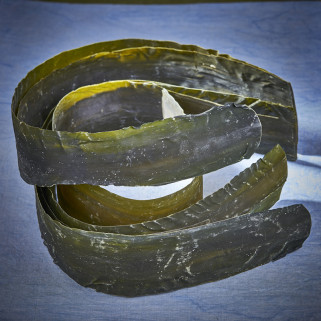
Rishiri kombu proposed here is a high-quality product that follows Ma kombu and Rausu kombu. It is grown naturally and harvested after an average of two years. Rishiri-kombu is milder, saltier and harder than ma-kombu. Its dashi broth is rich, flavorful and clear, with an elegant aroma.
It is thinner than ma-kombu and slightly wedge-shaped near the stem. Leaves are dark brown and hard. It is mainly used to make dashi broths and is particularly popular in Kyoto tea ceremony dishes. Hard leaves prevent discoloration or deterioration during planing, making it an ideal ingredient for high-end tororo-kombu.
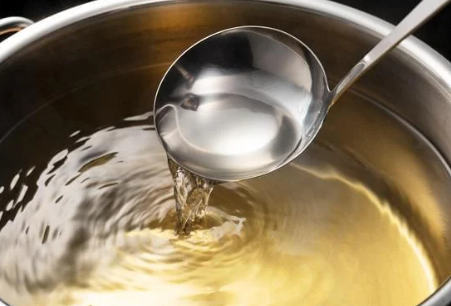
Our craftsman's tip: put 1 liter of cold water and 15 g of dried kombu in a saucepan. Leave to soak overnight. Bring to the boil over medium heat. Remove kombu and add shiitake mushrooms and bonito flakes, then bring to the boil. As soon as bonito shavings fall to the bottom of the pan, remove from the heat and strain stock without pressing shavings to avoid any bitterness.
Data sheet
Kombu seaweed is found in many countries around the globe, including Japan, Russia, China, Tasmania, Australia, South Africa, the Scandinavian Peninsula and Canada. In Japan, most kombu is harvested in Hokkaido, accounting for around 90% of total production.
Glacial Arctic Ocean waters that drift from Siberia to Hokkaido are rich in minerals and provide an environment that produces delicious kombu. Equipment used in Japan to dry kombu seaweed in the sun meets the most exacting sanitary standards, making Japanese kombu particularly popular worldwide.
Kombu seaweed from Hokkaido has long been distributed throughout Japan, and represents a major commercial challenge. Kombu seaweed harvested in Hokkaido used to be transported by boat, moving west along Sea of Japan coast to Osaka, a commercial center since that time.
For this reason, kombu seaweed wholesalers and processors are mainly located in or around Osaka. Kombu routes takes from Hokkaido to its destination is called the Kombu Route. It extends as far as China via Okinawa.

ALCOHOL ABUSE IS DANGEROUS FOR YOUR HEALTH. CONSUME IN MODERATION. CONSUMING ALCOHOLIC BEVERAGES DURING PREGNANCY, EVEN IN SMALL QUANTITIES, CAN HAVE SERIOUS CONSEQUENCES FOR THE HEALTH OF THE CHILD.


FAQ