

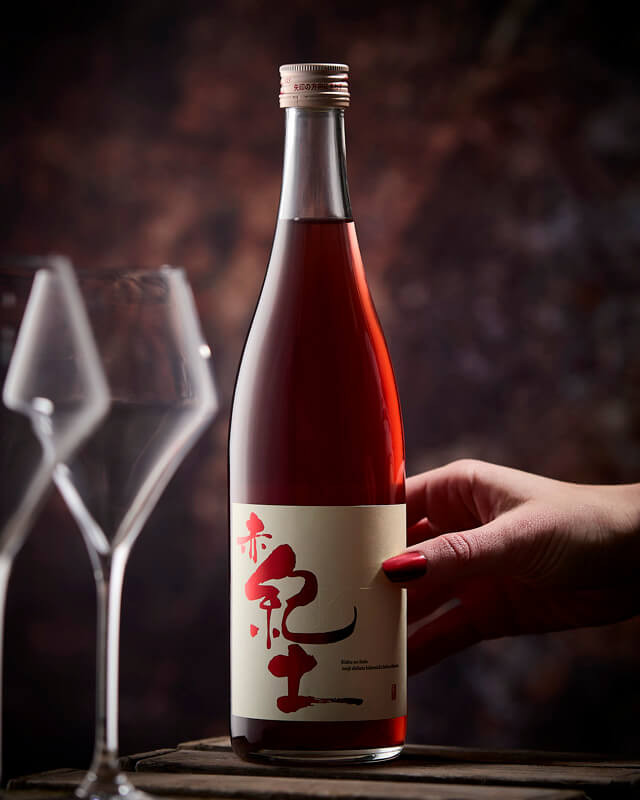
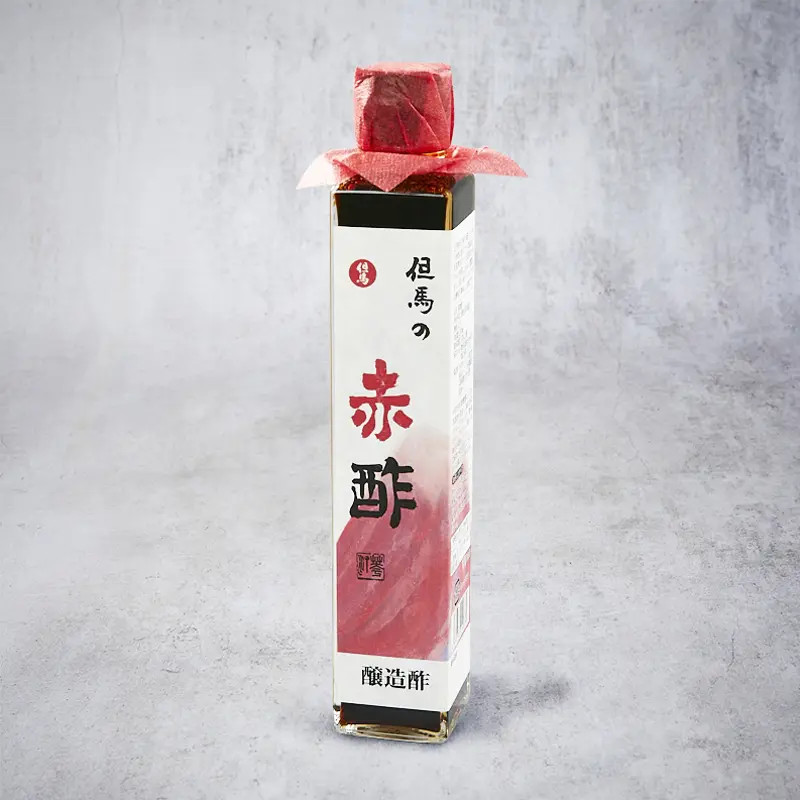

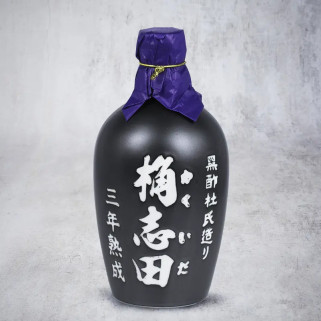
For the production of the Akasu red vinegar, the best sake lees are selected and left to naturally ferment for at least three years. After this long maturation period, the lees are pressed naturally and left to decant for another three months.
The artisan Hinode Tsuyo has only been producing his exceptional vinegars for ten years. Respectful of tradition, the production processes are completely artisanal. The strong points of the business are the quality of the raw materials, the mastery of the ancestral techniques and time.
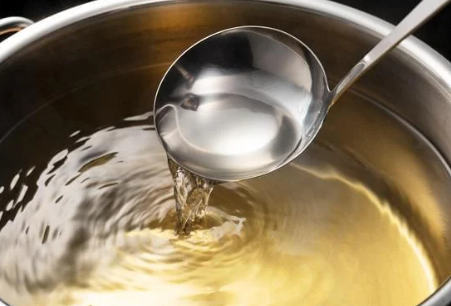
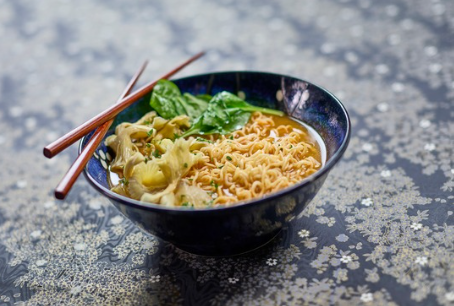
Our perfect combination : this vinegar will be perfect for the most demanding chefs - for cold or hot sauces, deglazing and more.
Data sheet
 HINODE HOLDINGS
Les ateliers Hinode Tsusho essaient de maintenir de bonnes relations avec les populations locales en leur fournissant des plats en utilisant leurs produits. Leur vinaigre le plus particulier est le vinaigre rouge Akasu, vinaigre riche à base de lies de saké vieillies. Lorsqu'ils fabriquent l'Akasu, ils conservent le vinaigre dans un stockage naturel et le fermentent. Ce procédé est très traditionnel et utilisé depuis longtemps au Japon. Le vieillissement dure d’abord 3 ans puis le vinaigre est filtré. Une fermentation de 3 mois suit. Ceci procure au vinaigre une douce acidité, une riche saveur et une richesse profonde.
 Anastasia T.

Very good (Translated review)

ALCOHOL ABUSE IS DANGEROUS FOR YOUR HEALTH. CONSUME IN MODERATION. CONSUMING ALCOHOLIC BEVERAGES DURING PREGNANCY, EVEN IN SMALL QUANTITIES, CAN HAVE SERIOUS CONSEQUENCES FOR THE HEALTH OF THE CHILD.


FAQ