


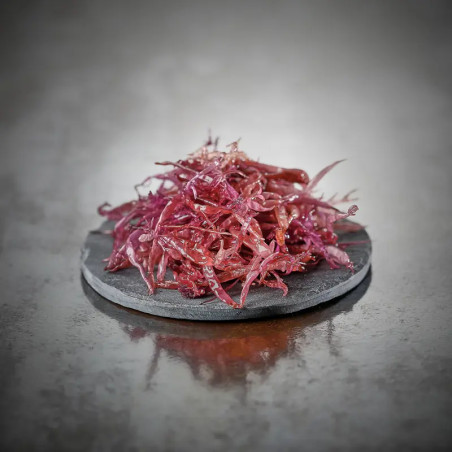

Ref : NISKITA2
Sanriku coastline, with its ria, is the source of its value. On the ria, where sea and mountains are closely intertwined, rainwater that has fallen over a long period seeps deep into the earth and produces mineral-rich water in the bay.
In addition, this region is one of the three most fertile fishing grounds in the world, where Oyashio and Kuroshio currents meet. These diverse conditions make Sanriku coast an ideal environment for growing Sanriku mekabu. This seaweed absorbs sufficient nutrients in Sanriku region to become a thick, firm mekabu, very sticky and aromatic.
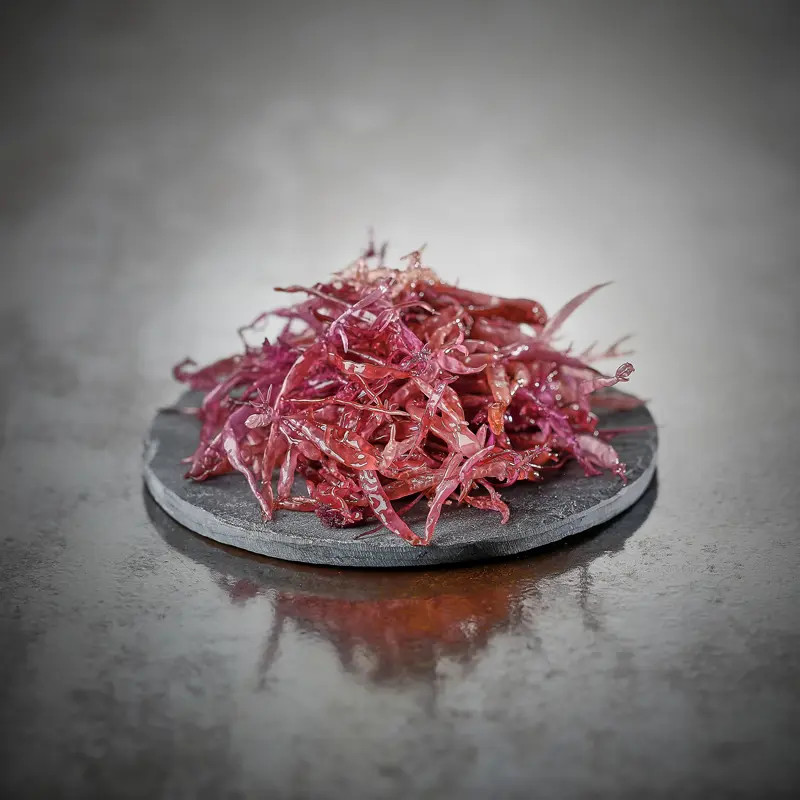
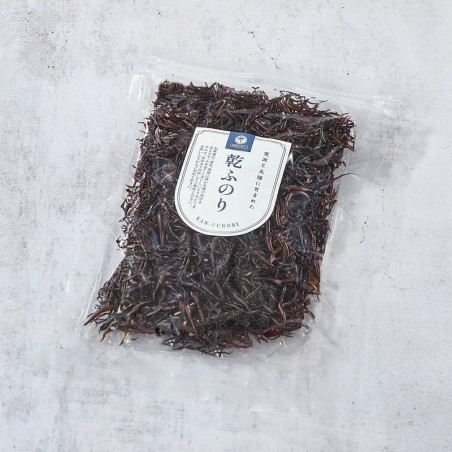
Other seaweeds thrive here, such as kombu, funori and black bara nori. This ria is also particularly well-suited to sea urchin farming. In Hirono seaside town, Iwate prefecture, many species of delicious seaweed are harvested from rough seas. Funori seaweed is particularly fragrant and has a crunchy texture.
It is harvested from January to early April, when water temperatures are low. In winter, low tides occur at night, so fishermen harvest in the moonlight, in extreme cold and sub-zero temperatures.
Several tons are harvested at the same time and sorted. After drying, they are sorted again. Kita-Sanriku plant attaches great importance to this sorting process and carefully selects seaweed immediately after unloading, washing it in fresh water and then drying it slowly and carefully to preserve its flavor.
These seaweeds are of highest quality: even after being rehydrated, they retain their oceanic flavors and texture. Of course, only grade 1 is used.
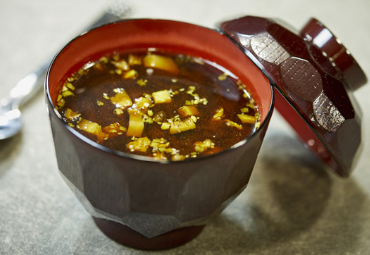
Funori seaweed can easily be enjoyed in miso soup, as well as in vinegar-based dishes. Funori is rich in soluble dietary fiber and has become one of our most popular products in recent years due to its potential for improving intestinal health.
Rehydration tips:
・Place desired amount of dried Funori in a colander.
・Soak in water until seaweed is completely submerged and untangle it little by little using your hands.
・Assure complete soaking for about 2 minutes.
・Evacuate the algae and wipe off the water with absorbent paper.
Important Best result is achieved when Funori has a fleshy, firm texture after draining.
Data sheet
 Michelle A.

Very good (Translated review)
Sanriku coastline, with its ria, is the source of its value. On the ria, where sea and mountains are closely intertwined, rainwater that has fallen over a long period seeps deep into the earth and produces mineral-rich water in the bay.
In addition, this region is one of the three most fertile fishing grounds in the world, where Oyashio and Kuroshio currents meet. These diverse conditions make Sanriku coast an ideal environment for growing Sanriku mekabu. This seaweed absorbs sufficient nutrients in Sanriku region to become a thick, firm mekabu, very sticky and aromatic.
Other seaweeds thrive here, such as kombu, funori and black bara nori. This ria is also particularly well-suited to sea urchin farming. In Hirono seaside town, Iwate prefecture, many species of delicious seaweed are harvested from rough seas. Funori seaweed is particularly fragrant and has a crunchy texture.
It is harvested from January to early April, when water temperatures are low. In winter, low tides occur at night, so fishermen harvest in the moonlight, in extreme cold and sub-zero temperatures.

ALCOHOL ABUSE IS DANGEROUS FOR YOUR HEALTH. CONSUME IN MODERATION. CONSUMING ALCOHOLIC BEVERAGES DURING PREGNANCY, EVEN IN SMALL QUANTITIES, CAN HAVE SERIOUS CONSEQUENCES FOR THE HEALTH OF THE CHILD.


FAQ