




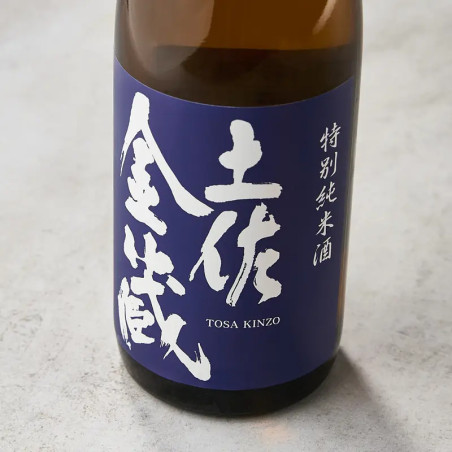



Ref : NISTKG8
■ 2023 Kura Master Junmai Sake Division Platinum Medal
■ Sake 2023 Contest of Sake Junmai Sake Medal
2025 Gold medal Competition Sake
2024 MEDAL OF ARGENT to the US National Sake Appraisal
2023 Platinum medal at Kura Master
2023 Silver medal At Sake Competition
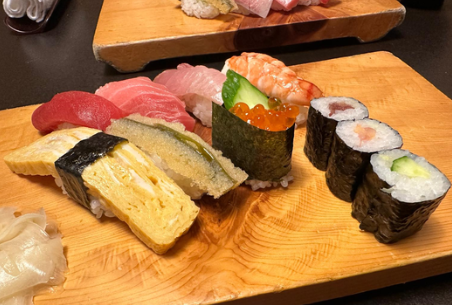
Agreement : Beautiful on the prirs and raw almonds, oysters, knives, flood langoustines, Saint Jacques, turbot sashimis or bar, doorade. Hot, with the explosion of the aromas, it will be necessary for the tasting of an entrieval, a bleeding breast, a pigeon chest or in accordance with a tajine, a curry, a couscous.
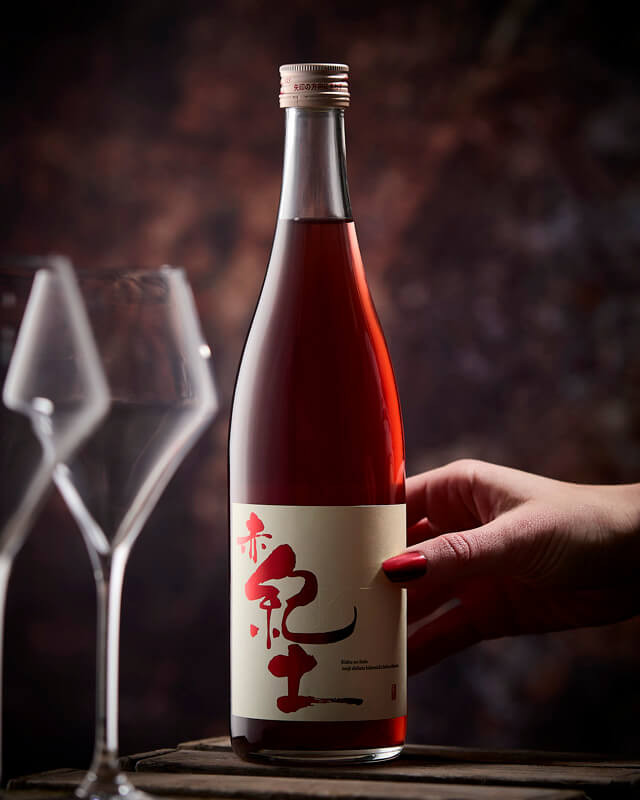
This saké is made with the new variety of Urara rice and yeasts that have been matured in the abyss of the ocean. The préfecture of Kochi, formerly Tosa, is deemed to produce the driest sakes of Japan.
They are distinguished by marked acidity and body, with very few aromatic defects and beautiful fluid notes at the end of the mouth. It enjoys the production of specific rice varieties, terroir-specific yeasts and high quality water, essential ingredients for the making of sakés.
The different varieties of rice, the qualities and characteristics adapted to the manufacture of the saké are 4:
• Tosa-Nishiki rice is recommended for Junmai and Junmai Ginjo for a fluid outcome in the mouth.
• The TOSA-URARA variety is a versatile rice with good results for Junmai, Junmai Ginjo and Junmai Daiginjo. It brings depth into the mouth and marked acidity.
• Gin-no-yume rice, variant of the highly renowned Yamada-Nishiki is low in protein and is suitable for brewing Junmai Daiginjo Sake.
• Finally, the Kaze-Nakuro rice, in the heart of wide and heavy grain, offers a lot of depth and imposes itself for the Junmai and the Junmai Ginjo.
The sakes produced with these rice are distinguished by a marked acidity and the body, with very few aromatic defects and beautiful fluid notes at the end of the mouth. There are more than 20 unique yeast varieties developed in Kochi, each determining acidity, gentleness, aromas.
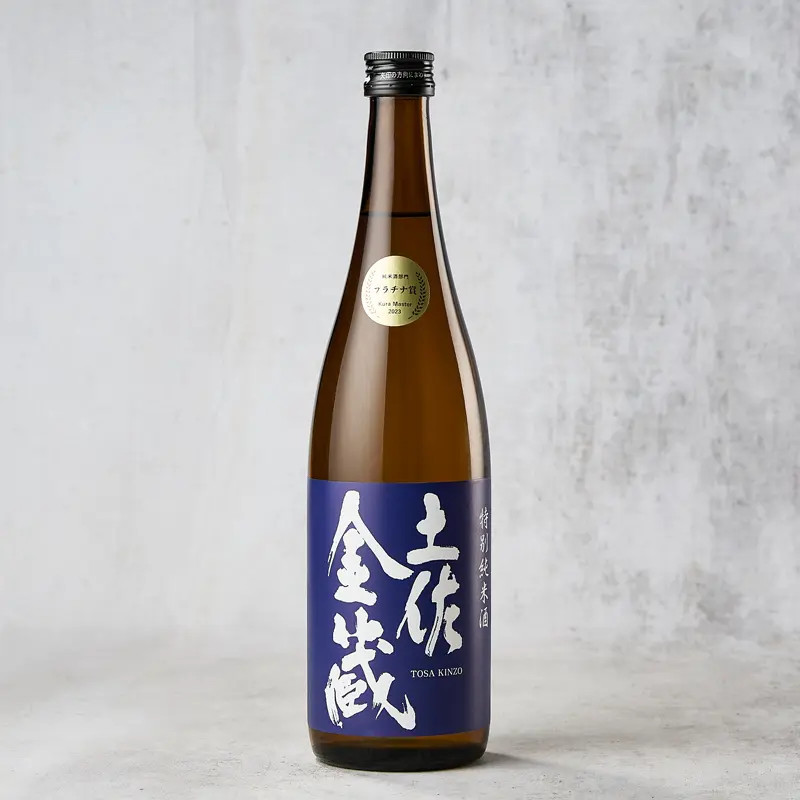
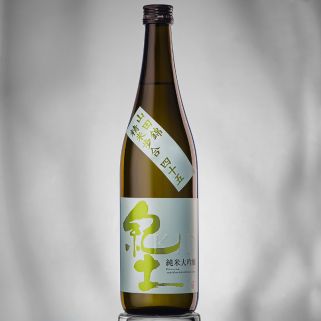
In 2005, a spatial yeast was grown for 10 days in space. In January and May 2021, yeast was placed at 6,200 meters deep off the ribs of Ibaraki Prefecture for four months. This process is identified as a culture at low temperatures and high pressures. The yeast had to survive several months at a depth of 6,200 meters, with a chance of survival of 1 out of 300 million. The Sake Tosa Kinzo Tokubetsu is a special brewed saké with two types of yeast: a yeast having traveled in space (Cosmos AC17) and the other subject to the marine depths (Cosmos Deep Sea AA41). This junmai saké, made from 100% kochi ingredients and brewed by a sixth-generation master brewer with "Tosa Urara", a new variety of rice adapted to the production of Sake in the prefecture of Kochi, and the yeast of Kochi. It has a light and sweet aroma reminiscent of banana and melon, a sweet flavor, final with marked acidity.
Data sheet
■ 2023 Kura Master Junmai Sake Division Platinum Medal
■ Sake 2023 Contest of Sake Junmai Sake Medal
2025 Gold medal Competition Sake
2024 MEDAL OF ARGENT to the US National Sake Appraisal
2023 Platinum medal at Kura Master
2023 Silver medal At Sake Competition
Agreement : Beautiful on the prirs and raw almonds, oysters, knives, flood langoustines, Saint Jacques, turbot sashimis or bar, doorade. Hot, with the explosion of the aromas, it will be necessary for the tasting of an entrieval, a bleeding breast, a pigeon chest or in accordance with a tajine, a curry, a couscous.
This saké is made with the new variety of Urara rice and yeasts that have been matured in the abyss of the ocean. The préfecture of Kochi, formerly Tosa, is deemed to produce the driest sakes of Japan.
They are distinguished by marked acidity and body, with very few aromatic defects and beautiful fluid notes at the end of the mouth. It enjoys the production of specific rice varieties, terroir-specific yeasts and high quality water, essential ingredients for the making of sakés.
The different varieties of rice, the qualities and characteristics adapted to the manufacture of the saké are 4:
• Tosa-Nishiki rice is recommended for Junmai and Junmai Ginjo for a fluid outcome in the mouth.
• The TOSA-URARA variety is a versatile rice with good results for Junmai, Junmai Ginjo and Junmai Daiginjo. It brings depth into the mouth and marked acidity.
• Gin-no-yume rice, variant of the highly renowned Yamada-Nishiki is low in protein and is suitable for brewing Junmai Daiginjo Sake.
• Finally, the Kaze-Nakuro rice, in the heart of wide and heavy grain, offers a lot of depth and imposes itself for the Junmai and the Junmai Ginjo.
The sakes produced with these rice are distinguished by a marked acidity and the body, with very few aromatic defects and beautiful fluid notes at the end of the mouth. There are more than 20 unique yeast varieties developed in Kochi, each determining acidity, gentleness, aromas.

ALCOHOL ABUSE IS DANGEROUS FOR YOUR HEALTH. CONSUME IN MODERATION. CONSUMING ALCOHOLIC BEVERAGES DURING PREGNANCY, EVEN IN SMALL QUANTITIES, CAN HAVE SERIOUS CONSEQUENCES FOR THE HEALTH OF THE CHILD.


FAQ