







Ref : NISYZTE3
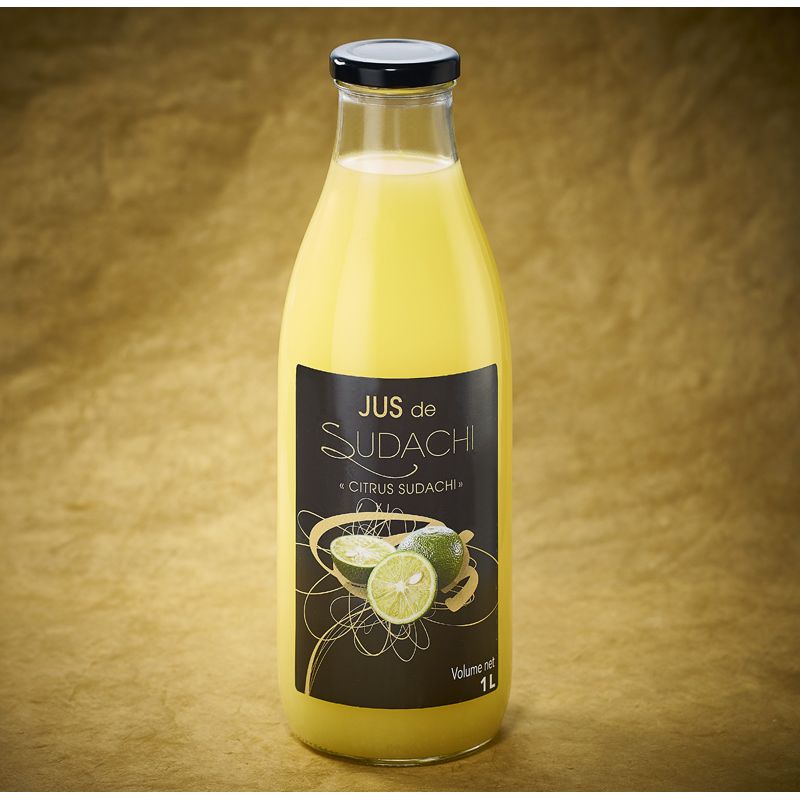
The sudachi (citrus sudachi) is another iconic citrus fruit from Japan.
Its production, of around 5,000 tonnes, is 98% concentrated on Shikoku Island, and more precisely in Tokushima Prefecture. The weather conditions are very suitable - a moderate climate and average rainfall.
The fruit is very sensitive to its main enemies; the wind and rain, and then the many deer and wild boar in the surrounding countryside that feed on the tree bark. The trees, with their short trunks, are pruned to an average height of 2 metres, making manual harvesting easier.
The branches are full of sharp thorns. The trees bear fruit after 5 to 6 years and only produce on average 5 kg of fruit. Our juice is made from fruit exclusively sourced from the few rare farms approved for Europe, which are strictly controlled.
They are farmed sustainably and in open-field cultivation (we refuse fruit grown under glass as it is saturated in pesticides). The Japanese harvest the sudachi while they are still green because they love its sharp acidity. The harvest period is short, from late August/early September to mid-October.
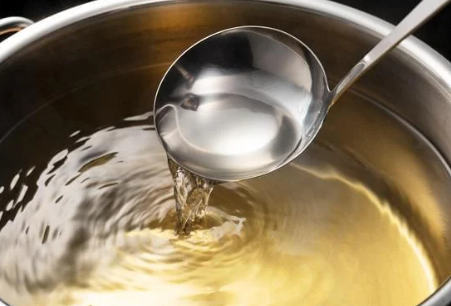
The fruit is quite small, from 30 to 55 mm in diameter, and has many seeds. Chefs love to combine sudachi juice with wild matsutake mushrooms or fish and shellfish. Sudachi is also used to fragrance many ponzus (condiment made with soy sauce and dashi broth).
The bark is fine and delicious when finely grated over fish, meat, desserts or salads. Its juice is reminiscent of the lime, but with a little more punch and a great deal of freshness and peppery notes at the end. Cocktail bars use it in mojitos, gin, vodka (alcohol abuse is dangerous for your health, consume in moderation) and alcohol-free drinks too.
Ice-cream makers use it to make sorbets. Pastry and chocolatiers use it for its freshness and final slight peppery notes.
Data sheet
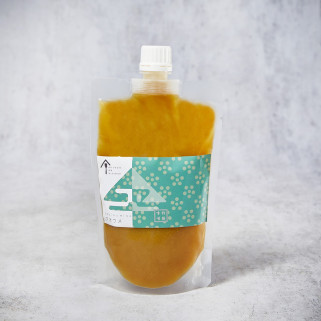
The sudachi (citrus sudachi) is another iconic citrus fruit from Japan.
Its production, of around 5,000 tonnes, is 98% concentrated on Shikoku Island, and more precisely in Tokushima Prefecture. The weather conditions are very suitable - a moderate climate and average rainfall.
The fruit is very sensitive to its main enemies; the wind and rain, and then the many deer and wild boar in the surrounding countryside that feed on the tree bark. The trees, with their short trunks, are pruned to an average height of 2 metres, making manual harvesting easier.
The branches are full of sharp thorns. The trees bear fruit after 5 to 6 years and only produce on average 5 kg of fruit. Our juice is made from fruit exclusively sourced from the few rare farms approved for Europe, which are strictly controlled.
They are farmed sustainably and in open-field cultivation (we refuse fruit grown under glass as it is saturated in pesticides). The Japanese harvest the sudachi while they are still green because they love its sharp acidity. The harvest period is short, from late August/early September to mid-October.
The fruit is quite small, from 30 to 55 mm in diameter, and has many seeds. Chefs love to combine sudachi juice with wild matsutake mushrooms or fish and shellfish. Sudachi is also used to fragrance many ponzus (condiment made with soy sauce and dashi broth).
The bark is fine and delicious when finely grated over fish, meat, desserts or salads. Its juice is reminiscent of the lime, but with a little more punch and a great deal of freshness and peppery notes at the end. Cocktail bars use it in mojitos, gin, vodka (alcohol abuse is dangerous for your health, consume in moderation) and alcohol-free drinks too.
Ice-cream makers use it to make sorbets. Pastry and chocolatiers use it for its freshness and final slight peppery notes.

ALCOHOL ABUSE IS DANGEROUS FOR YOUR HEALTH. CONSUME IN MODERATION. CONSUMING ALCOHOLIC BEVERAGES DURING PREGNANCY, EVEN IN SMALL QUANTITIES, CAN HAVE SERIOUS CONSEQUENCES FOR THE HEALTH OF THE CHILD.


FAQ