







Ref : NISMMF004
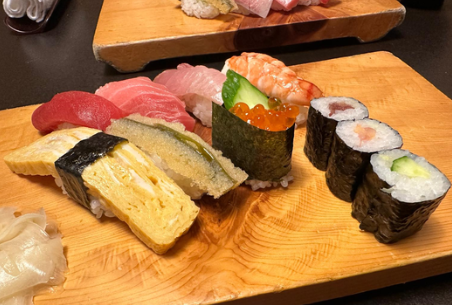
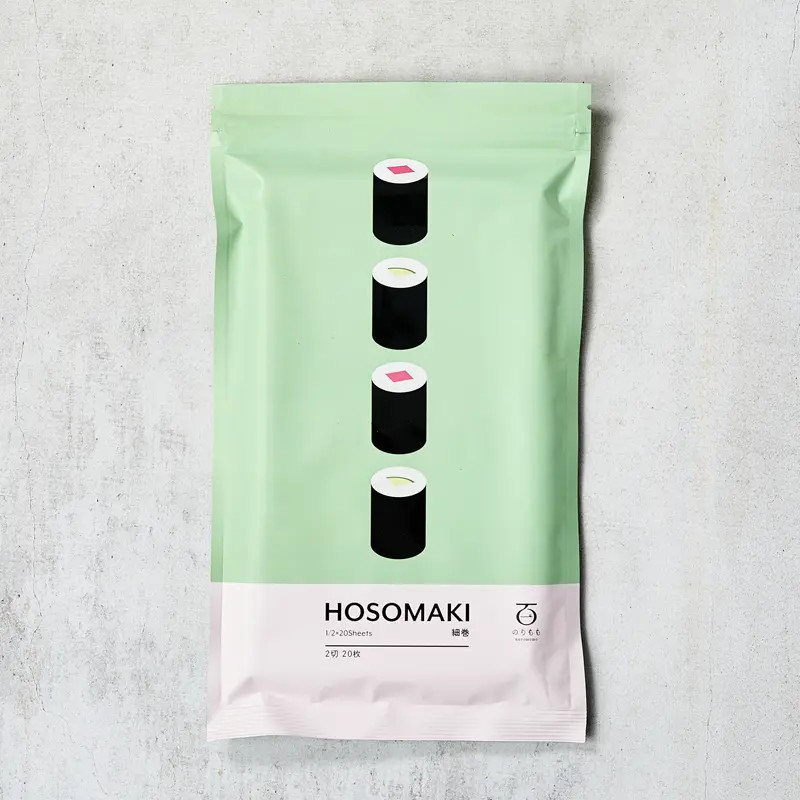
Hosomaki is a type of sushi roll that is thinner than other types of sushi, such as futomaki. Although both are wrapped in a sheet of nori on the outside and contain a layer of vinegared rice on the inside, hosomaki is thin and slender, while futomaki has a larger diameter.
When sushi rice is wrapped in a sheet of nori seaweed and rolled, the result is a sushi roll. In Japan, this is called makizushi or maki sushi.
There are several types of sushi rolls:
Hosomaki: Thin rolls, about 2.5 cm in diameter, with a sheet of nori on the outside, containing a single ingredient (e.g., avocado, cucumber, and salmon).
Chumaki: Medium rolls, about 2.5 to 3.8 cm in diameter, wrapped in nori on the outside, containing 2 to 3 ingredients (e.g., salmon, avocado, cucumber)
Futomaki: Thick rolls, about 5 to 6.3 cm in diameter, with nori on the outside, containing 4 to 5 ingredients (e.g., salmon, avocado, cucumber, cream cheese)
Uramaki: “Inside-out” rolls with nori on the inside, better known as California Rolls
Temaki: Cone-shaped sushi rolls filled with rice and several ingredients Hosomaki means “thin roll” in Japanese.
It has a slender shape and simple style and is presented on a small bamboo mat. Hosomaki consists of sushi rice wrapped in a sheet of nori (dried seaweed) with a filling, which can be vegetables or fish.
To make it a quick snack or an ideal starter, it should be cut into small pieces. Hosomaki is prepared using a bamboo mat.
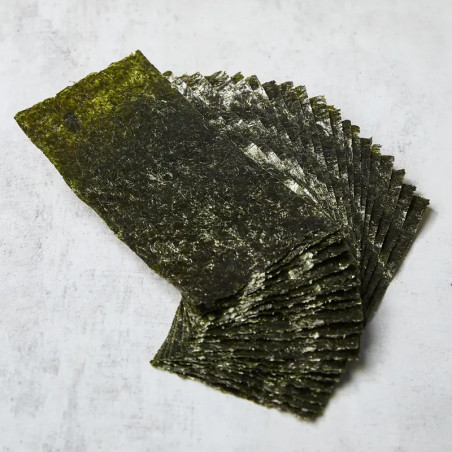
Nori seaweed introduced here has been toasted. It has a crunchy, crisp texture with a delicate sea flavor and subtle, elegant umami. This seaweed is rich in minerals and also acts as a flavor enhancer. These hosomaki nori sheets are completely natural, with no additives or preservatives.
Data sheet
Hosomaki is a type of sushi roll that is thinner than other types of sushi, such as futomaki. Although both are wrapped in a sheet of nori on the outside and contain a layer of vinegared rice on the inside, hosomaki is thin and slender, while futomaki has a larger diameter.
When sushi rice is wrapped in a sheet of nori seaweed and rolled, the result is a sushi roll. In Japan, this is called makizushi or maki sushi.
There are several types of sushi rolls:
Hosomaki: Thin rolls, about 2.5 cm in diameter, with a sheet of nori on the outside, containing a single ingredient (e.g., avocado, cucumber, and salmon).
Chumaki: Medium rolls, about 2.5 to 3.8 cm in diameter, wrapped in nori on the outside, containing 2 to 3 ingredients (e.g., salmon, avocado, cucumber)
Futomaki: Thick rolls, about 5 to 6.3 cm in diameter, with nori on the outside, containing 4 to 5 ingredients (e.g., salmon, avocado, cucumber, cream cheese)
Uramaki: “Inside-out” rolls with nori on the inside, better known as California Rolls
Temaki: Cone-shaped sushi rolls filled with rice and several ingredients Hosomaki means “thin roll” in Japanese.
It has a slender shape and simple style and is presented on a small bamboo mat. Hosomaki consists of sushi rice wrapped in a sheet of nori (dried seaweed) with a filling, which can be vegetables or fish.
To make it a quick snack or an ideal starter, it should be cut into small pieces. Hosomaki is prepared using a bamboo mat.
Nori seaweed introduced here has been toasted. It has a crunchy, crisp texture with a delicate sea flavor and subtle, elegant umami. This seaweed is rich in minerals and also acts as a flavor enhancer. These hosomaki nori sheets are completely natural, with no additives or preservatives.

ALCOHOL ABUSE IS DANGEROUS FOR YOUR HEALTH. CONSUME IN MODERATION. CONSUMING ALCOHOLIC BEVERAGES DURING PREGNANCY, EVEN IN SMALL QUANTITIES, CAN HAVE SERIOUS CONSEQUENCES FOR THE HEALTH OF THE CHILD.


FAQ