






Ref : NISHSOP1
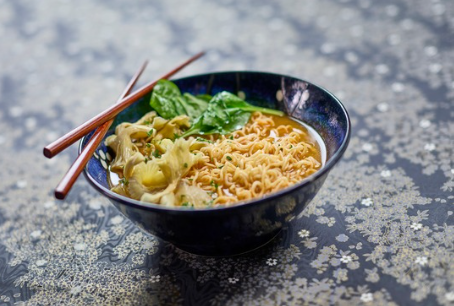
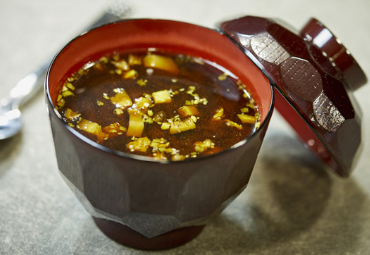
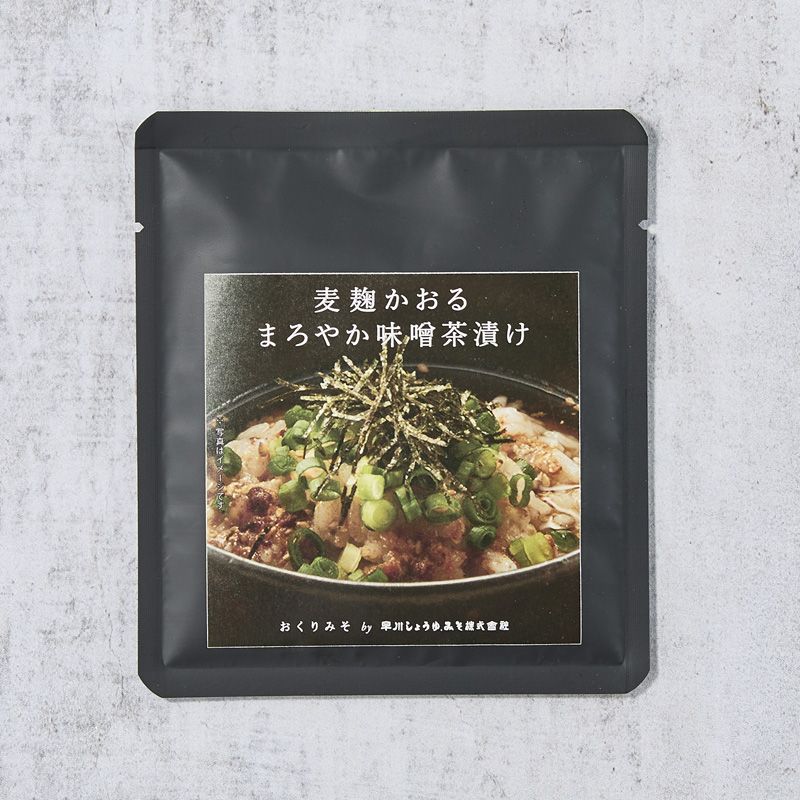
Ochazuke is a traditional Japanese dish, served in a bowl in which tea or broth is poured over rice. It's a comforting staple for those wishing to eat a light but hot meal in cold weather, or even serve it as a cold tea in summer (preferring ryokucha or mugicha teas).
"Ocha" means tea and "zuke" means submerged. Consequently, Ochazuke essentially means submerged in tea. According to purists, origins of ochazuke can be traced back to the Heian period (794-1185), when people used to drink tea and eat rice.
In the middle of the Edo period (1603-1687), Japanese people began to add garnishes, such as Umeboshi plums, cooked salmon, ikura salmon roe and tsukemonos.
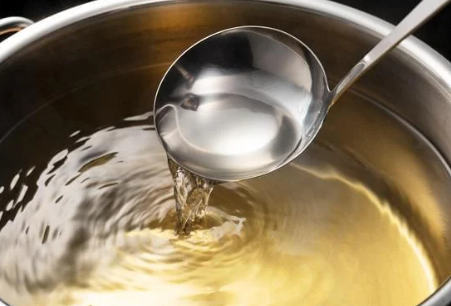
Original broth was water; this soon evolved into tea and then, in the 20th century, dashi, to enhance flavors.
Today, Japanese people generally eat rice ochazuke with green tea or dashi, accompanied by tsukemonos (pickled vegetables) or cooked salmon, then nori seaweed.
Main liquids used for ochazuke are green tea or ryokucha, genmaicha tea, hojicha tea, sencha tea and dashi broth. Japanese people generally eat Ochazuke as an appetizer or to round off a hearty meal. This ochazuke mixture, known as "mugikoji", is traditional to Miyazaki Prefecture.
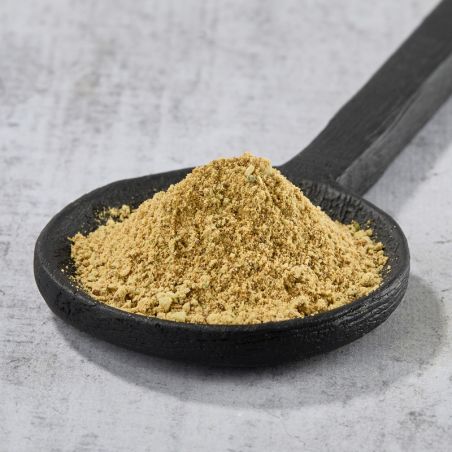
Basic seasoning is powdered white barley miso. This miso offers buttery, brioche, biscuity and nutty notes, all with a mild, balanced saltiness. Sesame and peanuts add roundness, while kombu, sardine flakes and katsuobushi add umami.
Quantities for a good ochazuke: 100-150g hot rice 1 sachet ochazuke preparation 150-200 ml hot sencha tea or hot dashi or hot water
.png)
Data sheet
 Hayakawa Shoyu Miso
Hayakawa Shoyu Miso by Kaworu HAYAKAWA, seventh generation, who developed miso powder technology for the first time in the miso industry:
"We have continued to produce high-quality fermented foods, such as miso and soy sauce, in order to preserve local flavors embodied by miso soup.
Miso has a food culture in each region that is similar to concept of terroir. Concept of terroir is derived from wine, in which grapes with different characteristics are grown in the unique soil of each region, and these characteristics are enhanced by alcoholic fermentation.
Miso is similar to this terroir concept, but local character is expressed by local culture formed by artisans. Each region is proud of its "local tastes", such as rice miso from Shinshu, soy miso from Aichi, sweet miso from Kansai and barley miso from Kyushu. We are a company that has been preserving taste of Miyakonojo for seven generations. Not only our special ingredients, but also our recipe ideas, unique processes, preservation methods and water resources are important elements of each of these products. This long tradition, which has been perpetuated from ancient times to present day, is akin to contemporary art.
Kyushu method is our pride and joy. Our factory is located in the south of Kyushu island, Japan. Our food culture in Kyushu is cooked to achieve a sweet taste. That's why soy sauce and miso are also sweeter than in other regions.
The region has a unique culture in which koji mold, a fermentation fungus essential to miso and soy sauce, is also specialized in barley miso prodcution. Compared with miso made from husked rice, barley miso contains complex nutrients that give it a rich, aromatic flavor.
Fermented foods have a fascinating taste, umami. It's made up of decomposed starch and protein.
Barley miso contains less starch than husked rice miso. That's why our barley miso is not overly sweet, thanks to raw materials complexity it's made from, allowing you to enjoy its aroma.
Miso powder, a creation of the impossible:
UMAMI miso powder has been created by Hayakawa Shoyu Miso using unique technology.
This miso powder is of the same quality as that approved by Miso Artists. This product has been confirmed by a research institute that the enzymes in this miso are still active. They are easily digested and absorbed by the body.
We want miso to be used more freely in gastronomy, fusion and other dishes. Of course, it can be used as soup, but we want it to be used sometimes as cheese, spice and dessert.
Encountering unfamiliar seasonings makes us realize the growing depth of our traditions.
Miso powder gives us the opportunity to cultivate culture”.
Ochazuke is a traditional Japanese dish, served in a bowl in which tea or broth is poured over rice. It's a comforting staple for those wishing to eat a light but hot meal in cold weather, or even serve it as a cold tea in summer (preferring ryokucha or mugicha teas).
"Ocha" means tea and "zuke" means submerged. Consequently, Ochazuke essentially means submerged in tea. According to purists, origins of ochazuke can be traced back to the Heian period (794-1185), when people used to drink tea and eat rice.
In the middle of the Edo period (1603-1687), Japanese people began to add garnishes, such as Umeboshi plums, cooked salmon, ikura salmon roe and tsukemonos.

ALCOHOL ABUSE IS DANGEROUS FOR YOUR HEALTH. CONSUME IN MODERATION. CONSUMING ALCOHOLIC BEVERAGES DURING PREGNANCY, EVEN IN SMALL QUANTITIES, CAN HAVE SERIOUS CONSEQUENCES FOR THE HEALTH OF THE CHILD.


FAQ