





Ref : NISSHM2
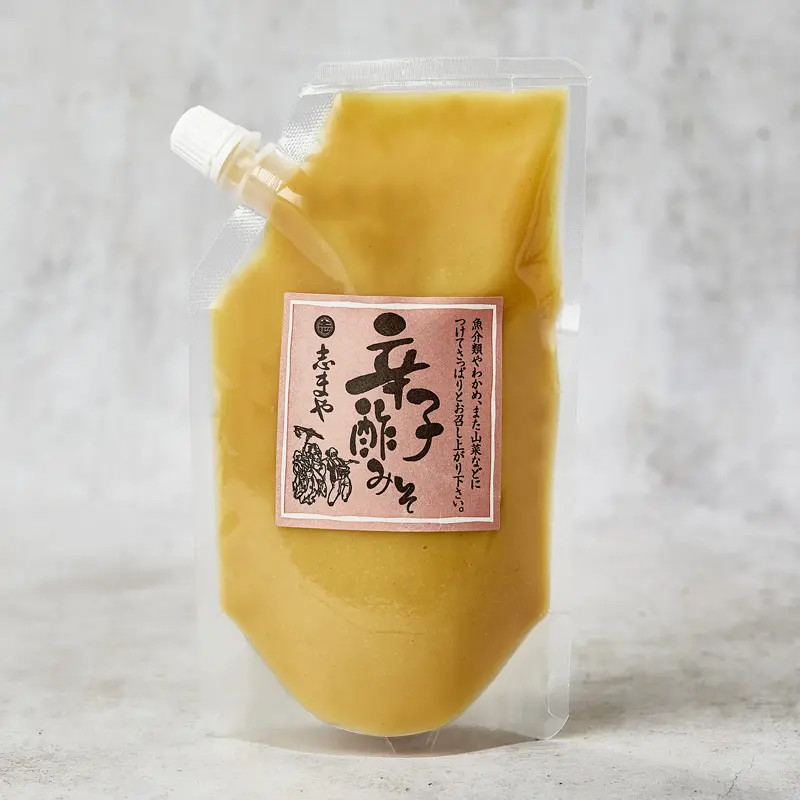
For white vinegar and mustard miso, the base is a silky and creamy white miso with a pleasant sweetness that lingers on the palate. White vinegar and mustard miso is made from creamy, slightly sweet white miso, enhanced with a carefully adjusted amount of mustard.
It is crafted to balance acidity and spiciness without masking the delicate flavor of sumiso. This harmony between acidity and spiciness is rare in Japan and is one of the strengths of this product line.
This miso is ready to use and requires no additional cooking. Simply pour or mix it with boiled ingredients. It goes particularly well with the following foods: green vegetables (broccoli, nanohana, spinach, celery, etc.), seafood (e.g., squid, conger eel, octopus), konjac, bamboo shoots, seaweed (e.g., wakame), myoga ginger, grilled flatfish, grilled shrimp...
Quality of miso depends on the quality of the koji. At Shimaya, most of the manufacturing steps are still done by hand. They steam the rice, then break it by hand while adding tane-koji (starter mold). Next day, they stir the koji three times at optimal intervals.
By sensing the seasonal changes and precisely synchronizing their process, they create koji with the best possible aroma and taste. Although labor-intensive, this artisanal approach guarantees the depth and satisfaction of their miso.
This vinegary white miso is a local specialty with a high koji content: “Gozen Miso.” Gozen Miso is distinguished by its high koji content, with a ratio of 110 to 130% compared to soybeans. At Shimaya, this ratio is increased to 140-160%, which enhances the natural sweetness of the koji.
After a fermentation period of six months to a year, the result is a less salty miso, rich in umami, with an exceptional aroma and flavor.
This sweet and mild miso is also an ideal base for “Okazu Miso” (seasoned miso condiments), including sea bream and sudachi miso, which are very popular in the region. Shimaya is committed not only to using domestic ingredients, but also to incorporating local products from Tokushima. Their “Gozen Miso Awa Monogatari,” made entirely from rice, soybeans, and salt from Tokushima, has been recognized by the Japan Food Industry Center as an authentic regional food brand under the “Homba no Honmono” certification.
Data sheet
For white vinegar and mustard miso, the base is a silky and creamy white miso with a pleasant sweetness that lingers on the palate. White vinegar and mustard miso is made from creamy, slightly sweet white miso, enhanced with a carefully adjusted amount of mustard.
It is crafted to balance acidity and spiciness without masking the delicate flavor of sumiso. This harmony between acidity and spiciness is rare in Japan and is one of the strengths of this product line.
This miso is ready to use and requires no additional cooking. Simply pour or mix it with boiled ingredients. It goes particularly well with the following foods: green vegetables (broccoli, nanohana, spinach, celery, etc.), seafood (e.g., squid, conger eel, octopus), konjac, bamboo shoots, seaweed (e.g., wakame), myoga ginger, grilled flatfish, grilled shrimp...
Quality of miso depends on the quality of the koji. At Shimaya, most of the manufacturing steps are still done by hand. They steam the rice, then break it by hand while adding tane-koji (starter mold). Next day, they stir the koji three times at optimal intervals.
By sensing the seasonal changes and precisely synchronizing their process, they create koji with the best possible aroma and taste. Although labor-intensive, this artisanal approach guarantees the depth and satisfaction of their miso.
This vinegary white miso is a local specialty with a high koji content: “Gozen Miso.” Gozen Miso is distinguished by its high koji content, with a ratio of 110 to 130% compared to soybeans. At Shimaya, this ratio is increased to 140-160%, which enhances the natural sweetness of the koji.
After a fermentation period of six months to a year, the result is a less salty miso, rich in umami, with an exceptional aroma and flavor.

ALCOHOL ABUSE IS DANGEROUS FOR YOUR HEALTH. CONSUME IN MODERATION. CONSUMING ALCOHOLIC BEVERAGES DURING PREGNANCY, EVEN IN SMALL QUANTITIES, CAN HAVE SERIOUS CONSEQUENCES FOR THE HEALTH OF THE CHILD.


FAQ