







Ref : NISWAKWA1
Bento boxes (or “お弁当” in Japanese) are a way of packing a meal in a suitable container so that it can be eaten later, usually outside the home. The word “bento” actually comes from the verb “bentou,” which means “convenient,” and therefore refers to a convenient way of eating a meal outside the home.
It seems that bento boxes originated in the Kamakura period (1185-1333), invented by farmers and merchants who needed a way to transport their food while they worked. During the Edo period (1603-1868), bento boxes became extremely popular in society as a convenient way to take a meal to work or school.
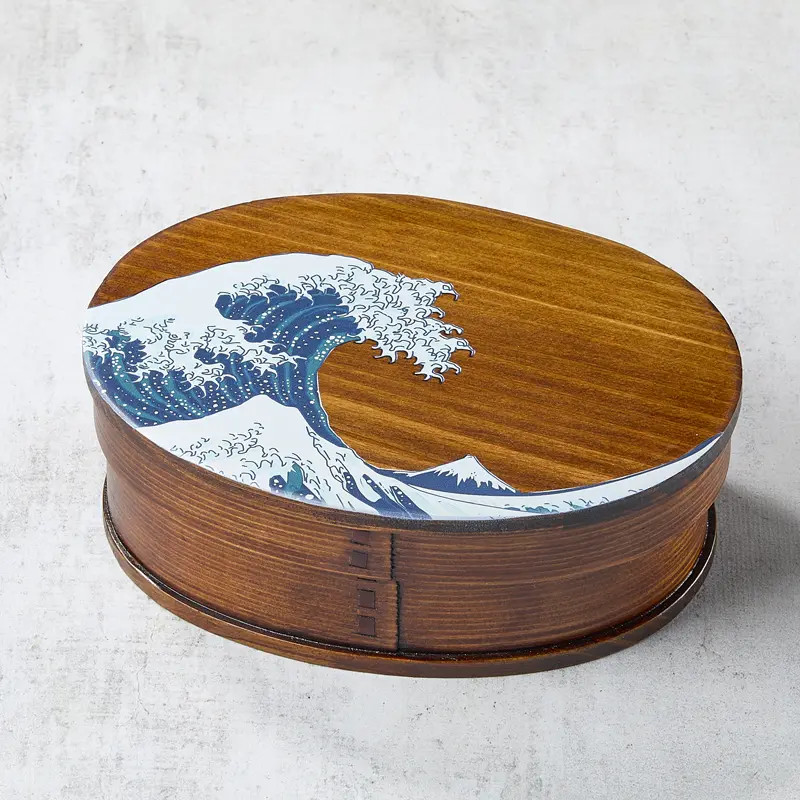
Lacquered wooden bento boxes are traditional Japanese in style. Lacquer technique used is called Urushi. Boxes are coated with several layers of lacquer, making them extremely durable and stain-resistant. These luxurious boxes are often decorated with patterns.
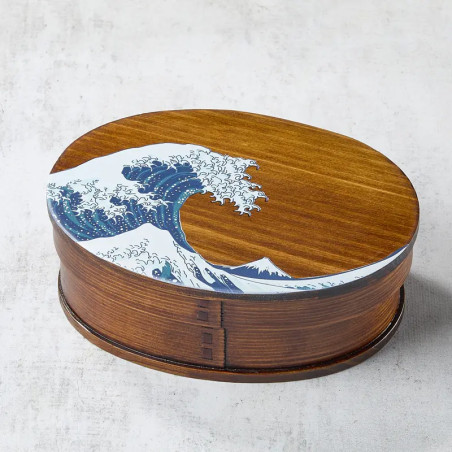
The decorative pattern here depicts “The Great Wave off Kanagawa” by Japanese artist Hokusai, from the artist's series Thirty-six Views of Mount Fuji (Fugaku sanjūrokkei). The stunning composition of this woodblock print has earned it its reputation as an icon of world art. Hokusai skillfully played with perspective to make Japan's largest mountain appear as a small triangular mound in the trough of a breaking wave.
The artist became famous for his landscapes created using a palette of indigo and imported Prussian blue.
Data sheet

Bento boxes (or “お弁当” in Japanese) are a way of packing a meal in a suitable container so that it can be eaten later, usually outside the home. The word “bento” actually comes from the verb “bentou,” which means “convenient,” and therefore refers to a convenient way of eating a meal outside the home.
It seems that bento boxes originated in the Kamakura period (1185-1333), invented by farmers and merchants who needed a way to transport their food while they worked. During the Edo period (1603-1868), bento boxes became extremely popular in society as a convenient way to take a meal to work or school.
Lacquered wooden bento boxes are traditional Japanese in style. Lacquer technique used is called Urushi. Boxes are coated with several layers of lacquer, making them extremely durable and stain-resistant. These luxurious boxes are often decorated with patterns.
The decorative pattern here depicts “The Great Wave off Kanagawa” by Japanese artist Hokusai, from the artist's series Thirty-six Views of Mount Fuji (Fugaku sanjūrokkei). The stunning composition of this woodblock print has earned it its reputation as an icon of world art. Hokusai skillfully played with perspective to make Japan's largest mountain appear as a small triangular mound in the trough of a breaking wave.
The artist became famous for his landscapes created using a palette of indigo and imported Prussian blue.

ALCOHOL ABUSE IS DANGEROUS FOR YOUR HEALTH. CONSUME IN MODERATION. CONSUMING ALCOHOLIC BEVERAGES DURING PREGNANCY, EVEN IN SMALL QUANTITIES, CAN HAVE SERIOUS CONSEQUENCES FOR THE HEALTH OF THE CHILD.


FAQ