





Ref : NISGINPO4
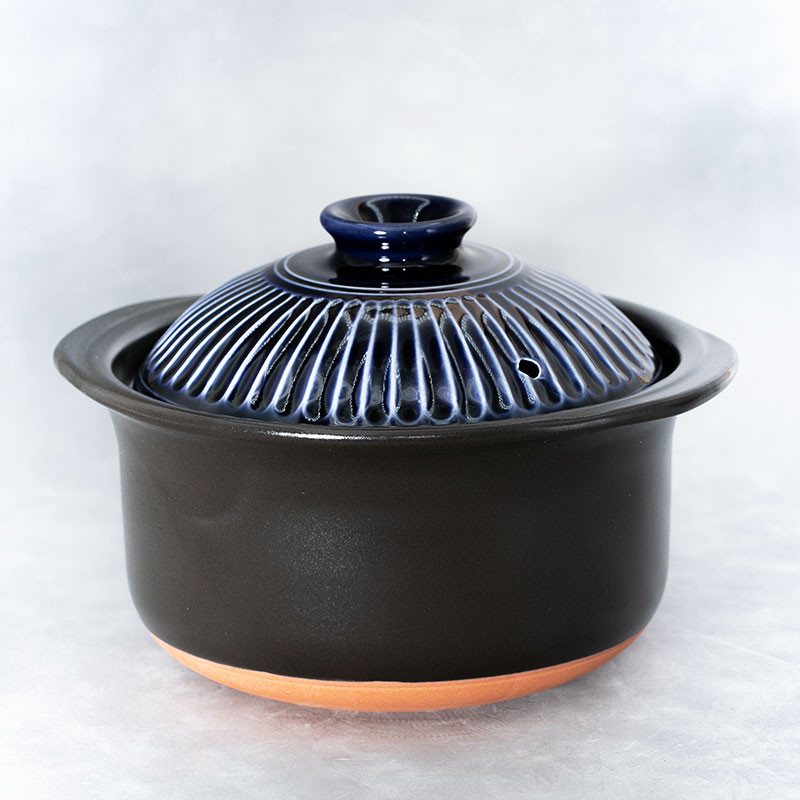
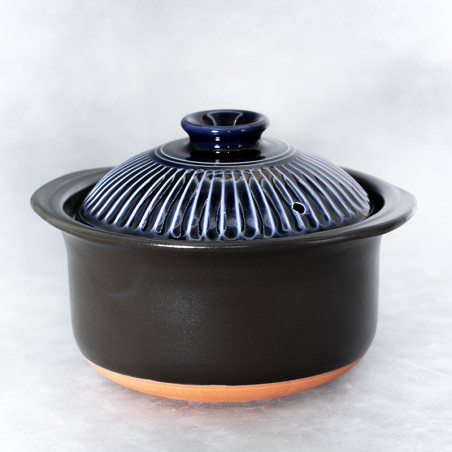
This handy “Donabe” style ceramic pot allows you to cook Japanese rice in 30 minutes without any flame control.
The water level scales, for the amount of dry rice, are inscribed inside the pot.
So there is no need to measure the water with a measuring cup.
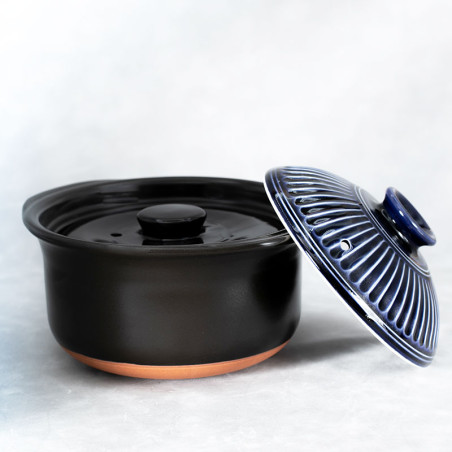
The structure of the lid prevents water from overflowing during cooking.
As soon as steam appears, all you have to do is stop cooking.
This pot is especially suitable for cooking stews and boiled foods in addition to boiled rice and takikomi gohan (a Japanese rice dish seasoned with broth and soy sauce).
When cooking dishes such as oden (a Japanese hot dish) or cream stew, the ingredients do not disintegrate easily and give a fuller taste with the broth soaking in deeply.
It goes without saying that rice is best when it's freshly steamed, and Kikka makes it easy to cook perfectly - in fact, it's almost foolproof.
Example how to prepare steamed Japanese rice :
. White rice : 2 cups 150g each
. 400 cc water
1- Wash the rice and drain it, then transfer it to the dish.
2- Add water to the fill line according to the amount of rice. (1 cup (150 g) of rice, add 200 cc of water).
3- Soak in water for 30 min then put the dish on the heat over medium to high heat. Cover the dish with its lid
4- When it boils and steam comes out of the hole in the lid, remove from heat and let it steam for about 20 min.
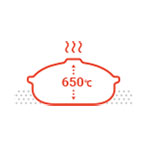 |
Heat resistance up to 650 ° C |  |
Cooking in these ceramic dishes allows a slower, less violent heat transfer, which has the effect of bringing out the flavor of the food. |
 |
Robustness and durability |  |
The ceramic promotes the production of infrared rays allowing a more uniform cooking. |
 |
Ceramic guaranteed without lead or cadmium |  |
Unlike metals, ceramic is suitable for microwave use. |
 |
Unlike dishes made of cast iron or aluminum alloy, these ceramics provide very good cooking heat and excellent storage of residual heat. |  |
Ceramic dishes are aesthetically beautiful and find their place on a reception table like serving dishes. |
Data sheet
 GINPO
GINPOIts ceramics are made from the best clays in the world and more particularly from the highest quality of petalite, the mineral of choice necessary for the realization of these confections.
Petalite influences the resistance of ceramics to heat, up to 650 ° C for the products we offer.
The enamel of Ginpo ceramics is guaranteed to be lead and cadmium free.
It offers a very aesthetic finish and prevents stains and odors while offering easy maintenance.
It is important to specify that many steps in the manufacture of these ceramics are manual.
 Floriana B.

Sublime !!!! (Translated review)
Anne marie B.
Very satisfied (Translated review)
This handy “Donabe” style ceramic pot allows you to cook Japanese rice in 30 minutes without any flame control.

ALCOHOL ABUSE IS DANGEROUS FOR YOUR HEALTH. CONSUME IN MODERATION. CONSUMING ALCOHOLIC BEVERAGES DURING PREGNANCY, EVEN IN SMALL QUANTITIES, CAN HAVE SERIOUS CONSEQUENCES FOR THE HEALTH OF THE CHILD.


FAQ