


Ref : NISMK6
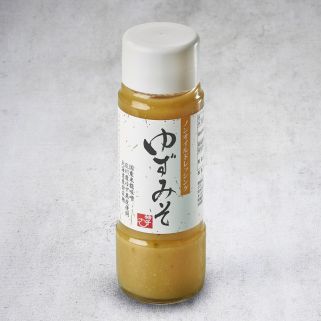
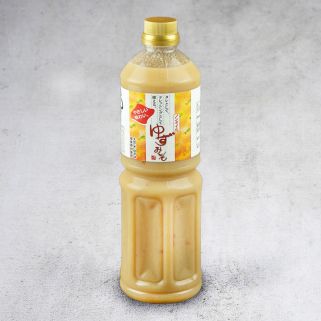
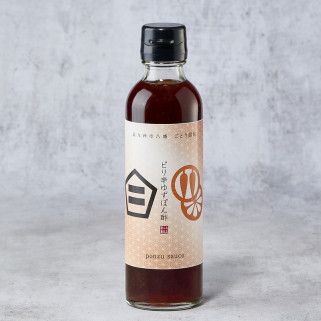
Yuzu miso is an authentic treat.
More about japanese miso paste 
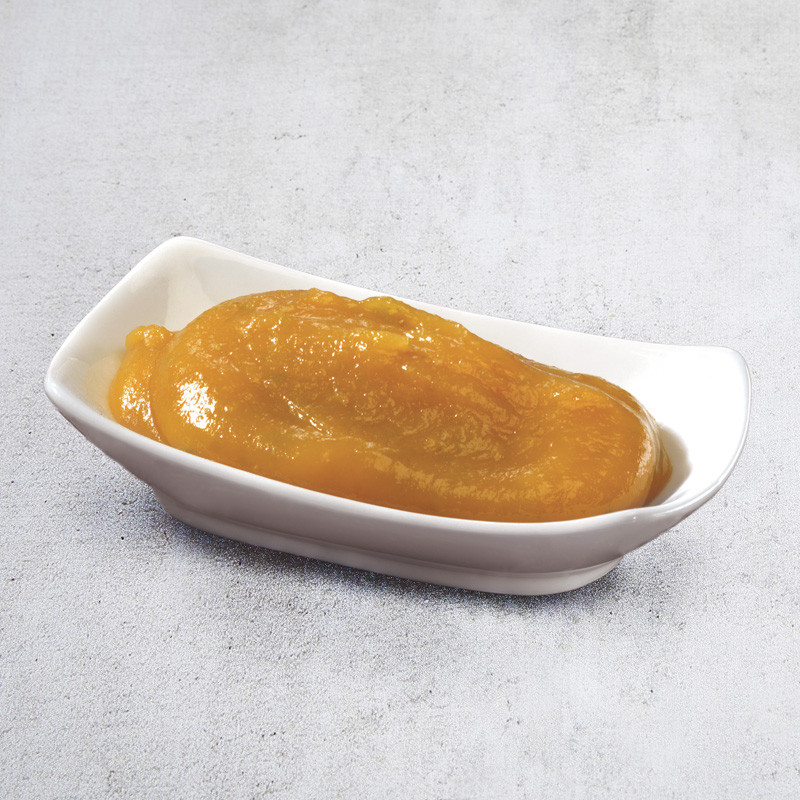
It's a yuzu-flavored white miso with a blend of grated shredded yuzu in chunks, white miso, sugar, mirin and sake.
It can be used as an ingredient for sauces or salad dressings.
You can enjoy a balanced harmony between yuzu peel with pleasant bitterness and the sweet taste of white miso.
Our perfect combination : very fresh, rich in perfumes and aromas, it is used as a condiment and to marinate meat and fish. It can also be used for eggplant dengaku, raw wheat gluten (nama-fu), Japanese radish stewed with small plants of the araceae family (furofuki-daikon) and cold or hot tofu.
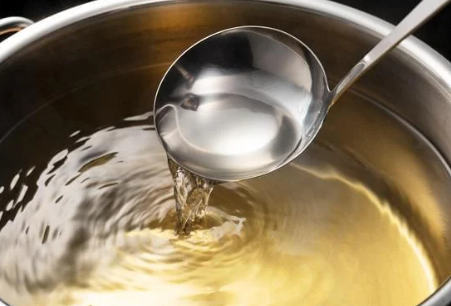
For a preparation of dengaku, you can use this miso as is or mix it with a little broth.
A generous pinch under a baked scallop or as an accompaniment to half-cooked foie gras, or escalope of foie gras, will be a delightfully surprising effect.
Data sheet
 KANTOYA
The Kantoya house, created by Chube Kantoya San, has been dedicated to making miso since 1847, 6 generations, in its workshop located south of the former imperial palace, the center of the Kyoto city.
Made miso has a taste that can only be created with the care and efforts of its craftsmen. They only use groundwater from the Hiei Mountain, 60 meters deep. The preferred manufacturing processes involve many artisanal operations.
Another example of the care they bring to their miso lies in the quality of kôji. Kôji is one of the key ingredients of miso: it brings a sweet taste by its glycation and increases the umami of miso, that is to say its flavor, by breaking down the proteins of soy. It takes three to four days to produce a kôji. During this period, kôji is carefully worked four times by human hands. The manual work is privileged because it allows to feel the effects of living kôji mold, which evolve every day. Being in touch with kôji makes all the difference.
KANTOYA miso is mainly used by Japanese restaurants and Kyoto confectioneries. Many of them have been implanted for a long time, and this for several decades. Today, the number of users of their miso is increasing thanks to long-standing customers who open new restaurants or generously introduce new customers.
Our master craftsmen think that miso plays a fundamental role in deciding the taste of dishes and confectionery. However, the taste is not always uniform depending on the variety, the growing area and the year of production of ingredients such as rice and soy. The role of KANTOYA is to facilitate collaboration between such miso and great chefs, who always try to cook the best dishes. They listen to each client's word and see their changing needs through close, long-term communication and provide them with the best miso.
The origins of white miso “shiro-miso” or "Saikyo-Miso"
From the 8th to the 17th century (from the Heian period to the Edo period), Kyoto, residence of the Emperor, was the capital of Japan and all the powers were concentrated in the city. Many "kuge" (court nobility) lived there and had good land all over Japan where they cultivated quality rice and were honored.
Using this type of rice, miso was once a high-salt conservation food. However, people noticed that with a higher rice content and a lower salt content, miso became very sweet. At that time, sweet condiments derived from trees or fruit were very valuable because there was no sugar. Having discovered that miso could be very sweet, they began to use it as well as these famous sweet condiments. It was used only in the imperial court, which would correspond to the beginning of the white miso in Kyoto.
At that time, white miso was also used as an ingredient in dishes served to deities during court rituals. The recipes of these dishes are also used in today's rituals as well as in many events for the general public: Zoni (rice cake soup) tasted at New Year, kashiwa-mochi (rice cake wrapped in a oak leaf) consumed at the Boys Festival in May, gyoja-mochi (ascetic rice cake) savored at the Gion Festival, and aburi-mochi (cooked rice cake) sold in the tea rooms in front of the temples. White miso has evolved differently from other types of miso. It has developed as a sweetener and its preservative quality has been sacrificed. This is why white miso is often used not only for cooking but also for confectionery.
In the Meiji era, the capital of Japan was moved from Kyoto to Tokyo and many court nobles, including the Emperor, moved to Tokyo. However, there was no such sweet white miso in Tokyo because it was a city of war culture. The nobles liked it all the sweet white miso of Kyoto and began to call it "Saikyo-Miso" (miso of the capital of the West). Even today, the white miso is called "saikyo-miso", but only "shiro-miso" (white miso) by the inhabitants of Kyoto.
Japanese people life is divided into two categories: "hare" and "ke". "Hare" means special and festive day and "ke" means ordinary day. Since ancient times, people have been eating special and precious foods such as rice balls, sekihan (festive red rice), sake and confectionery with special dishes. The Kyoto white miso played an important food role during these special days and developed through the rituals of the Court.
 Edouard m.

- (Translated review)
Florence G.
Not tasted yet (Translated review)
George b.
very good (Translated review)
Jean-Noël V.
Satisfied with the product (Translated review)
Sandra L.
I love it. (Translated review)
Anne P.
I wish it had been in a glass container, rather than a plastic bag. (Translated review)
Anne L.
Ditto (Translated review)
Anne marie B.
Delicious for making carrot or white cabbage vinaigrettes, a real discovery. (Translated review)
Anne marie B.
Delicious (Translated review)
PASCAL N.
excellent (Translated review)
Yuzu miso is an authentic treat.
More about japanese miso paste

ALCOHOL ABUSE IS DANGEROUS FOR YOUR HEALTH. CONSUME IN MODERATION. CONSUMING ALCOHOLIC BEVERAGES DURING PREGNANCY, EVEN IN SMALL QUANTITIES, CAN HAVE SERIOUS CONSEQUENCES FOR THE HEALTH OF THE CHILD.


FAQ