







Ref : NISMNK012
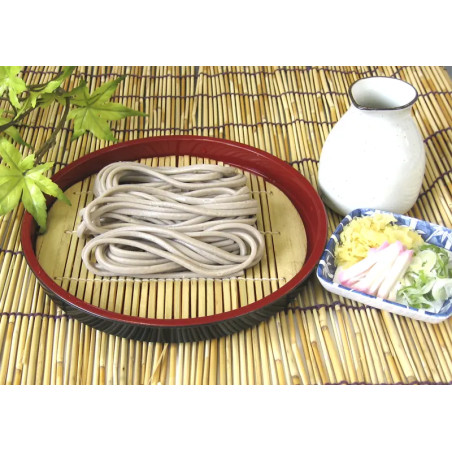
Soba is Japanese word for buckwheat. Soba are noodles generally made from a mixture of buckwheat flour (soba-ko) and wheat flour (komugi-ko). These noodles are among the best known and most popular in Japan. Rarest ones are made from 100% buckwheat flour.
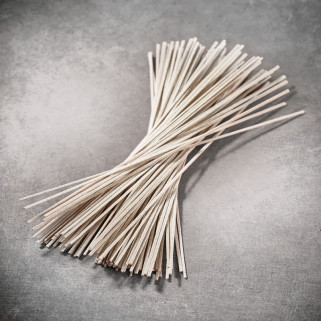
Buckwheat gives them their typical dark, brownish-gray color. As thick as spaghetti, soba can be eaten cold or hot. Most Japanese buckwheat comes from Hokkaido, most renowned source. Buckwheat is naturally gluten-free, rich in antioxidants, and beneficial for blood sugar control.
It is rich in heart-healthy nutrients, including magnesium and fiber. Japanese people are very particular about noodles texture, which must be firm and “al dente.” Japanese consider soba to be a symbol of long life. That's why they always eat it on New Year's Eve.
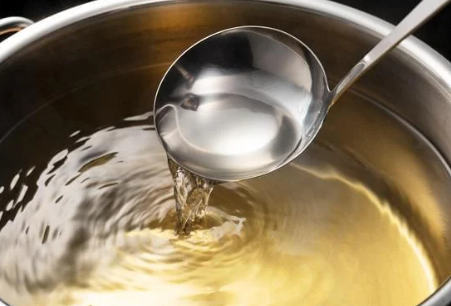
Soba can be enjoyed hot or cold with a tsuyu sauce, usually made from dashi, mirin, and soy sauce. Soba has a strong flavor that can be reminiscent of hazelnuts or Breton galettes.
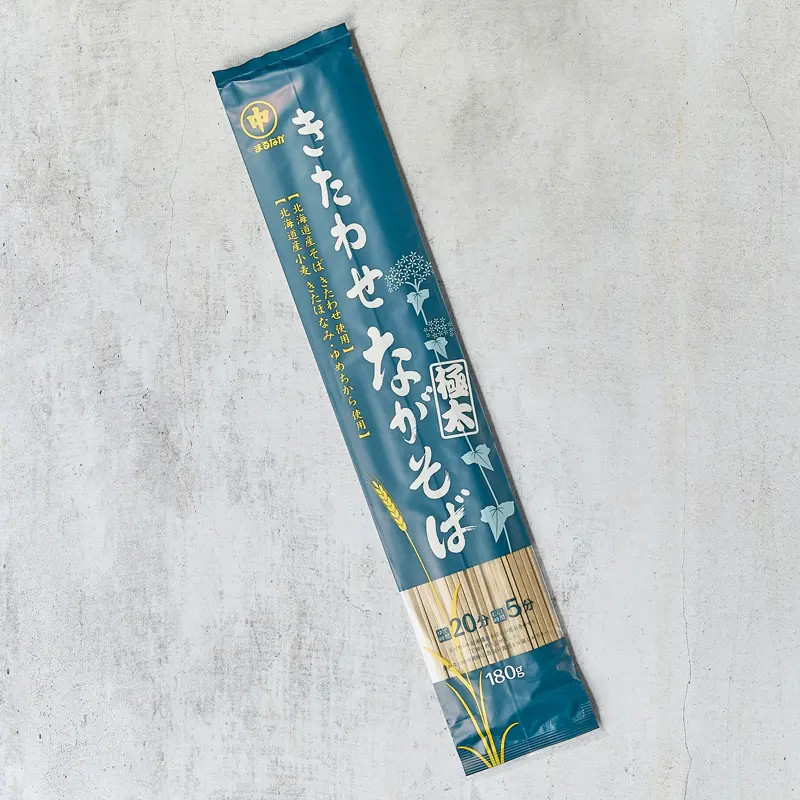
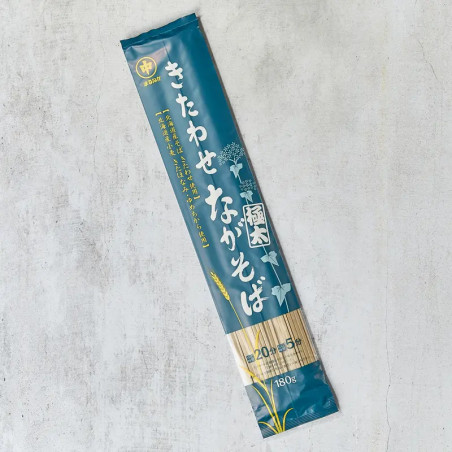
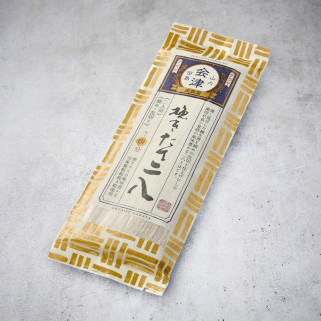
These long soba noodles are made from Kitawase buckwheat from Hokkaido and Kitahonami and Yumechikara wheat from Hokkaido. These thick, long soba noodles are extremely filling and have a unique texture.
250g = quantity for two people
Water required for cooking: 3,5
Cooking time in boiling water: 20 mn
Stir soba noodles to prevent them from sticking together. When cooked, place soba in a colander and rinse with cold running water to cool quickly and stop cooking process.
Once soba has cooled, rinse under running water, kneading with your hands to remove starch that causes stickiness. Finally, drain the water. If you put noodles in ice water to firm them up, they will have an even firmer and more chewy texture.
Data sheet
Soba is Japanese word for buckwheat. Soba are noodles generally made from a mixture of buckwheat flour (soba-ko) and wheat flour (komugi-ko). These noodles are among the best known and most popular in Japan. Rarest ones are made from 100% buckwheat flour.
Buckwheat gives them their typical dark, brownish-gray color. As thick as spaghetti, soba can be eaten cold or hot. Most Japanese buckwheat comes from Hokkaido, most renowned source. Buckwheat is naturally gluten-free, rich in antioxidants, and beneficial for blood sugar control.
It is rich in heart-healthy nutrients, including magnesium and fiber. Japanese people are very particular about noodles texture, which must be firm and “al dente.” Japanese consider soba to be a symbol of long life. That's why they always eat it on New Year's Eve.
Soba can be enjoyed hot or cold with a tsuyu sauce, usually made from dashi, mirin, and soy sauce. Soba has a strong flavor that can be reminiscent of hazelnuts or Breton galettes.
These long soba noodles are made from Kitawase buckwheat from Hokkaido and Kitahonami and Yumechikara wheat from Hokkaido. These thick, long soba noodles are extremely filling and have a unique texture.
250g = quantity for two people
Water required for cooking: 3,5
Cooking time in boiling water: 20 mn
Stir soba noodles to prevent them from sticking together. When cooked, place soba in a colander and rinse with cold running water to cool quickly and stop cooking process.
Once soba has cooled, rinse under running water, kneading with your hands to remove starch that causes stickiness. Finally, drain the water. If you put noodles in ice water to firm them up, they will have an even firmer and more chewy texture.

ALCOHOL ABUSE IS DANGEROUS FOR YOUR HEALTH. CONSUME IN MODERATION. CONSUMING ALCOHOLIC BEVERAGES DURING PREGNANCY, EVEN IN SMALL QUANTITIES, CAN HAVE SERIOUS CONSEQUENCES FOR THE HEALTH OF THE CHILD.


FAQ