







Ref : NISWA004S
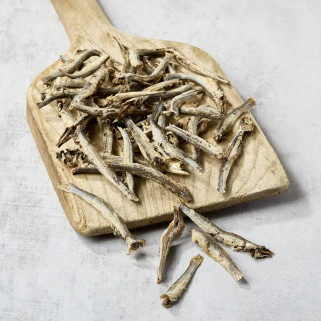
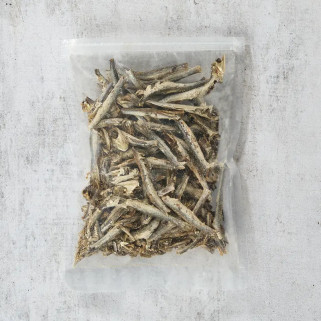
Niboshi is a small dried fish, most often baby sardines (more precisely Japanese anchovies or katakuchi-iwashi, but also ma-iwashi or sardines).
Busi and niboshi are the most suitable main ingredients for dashi and soups.
Niboshi, characterized by a light aroma, can be used to make a rich and flavorful dashi.
The process of making niboshi is relatively simple: small fish are boiled in salted water (to cook them and activate the enzymes that facilitate drying and the development of flavors), then dried thoroughly.
To obtain best possible flavor, it is often recommended to remove heads and guts from niboshi before preparing the dashi. These parts can give a bitter or overly fishy taste and make the dashi broth cloudy. However, for very small niboshi (such as kaeri) or high-quality niboshi, this step is sometimes omitted. Some cooks also lightly toast the niboshi in a dry frying pan before using them to enhance the aroma and reduce any lingering fishy flavor.
1 liter of fresh water and 30g of niboshi
· Remove the heads and guts from the dried fish. This reduces the bitterness.
· Soak the niboshi in the specified amount of water overnight.
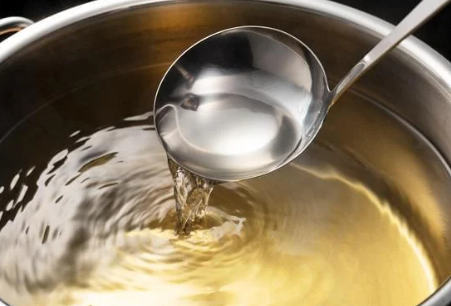
Transfer the niboshi and the soaking liquid to a small saucepan and slowly bring the water to a boil. Skim the surface of the liquid, reduce the heat to low, and cook for 8 to 10 minutes.
Drain in a fine strainer over a bowl or measuring cup. Dashi is ready.
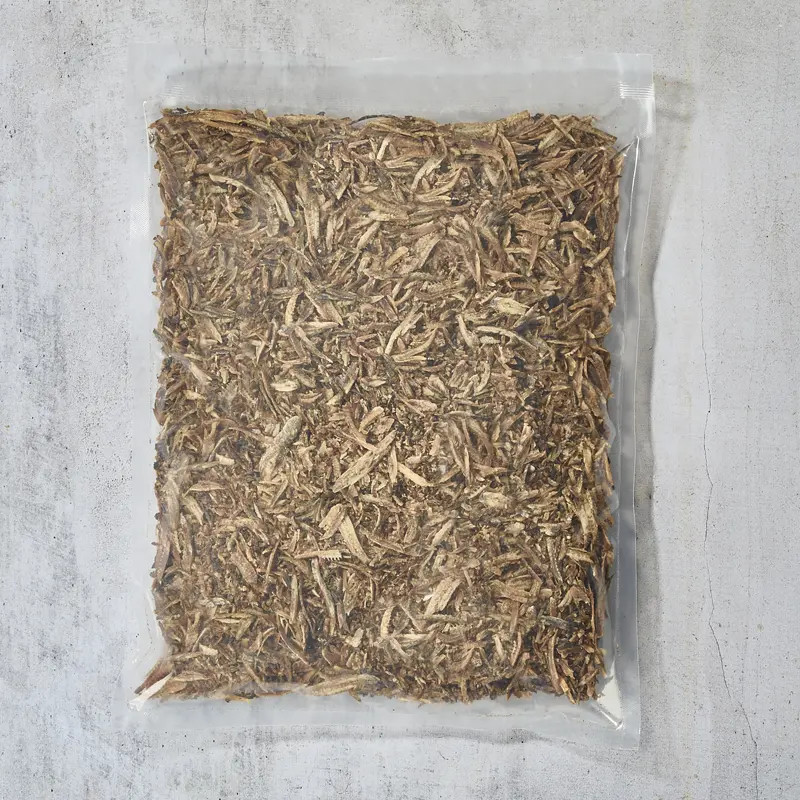
You can also use Niboshi Atsukezuri, a crumbled version of niboshi, to make your dashi. This version will give you a stronger and more colorful dashi.
Niboshi dashi has a strong, distinctive fish flavor and aroma, often more pronounced than that of katsuobushi dashi. It is less smoky and often described as having a richer, more “oceanic” taste. The main umami component here is also inosinic acid (may also contain glutamic acid).
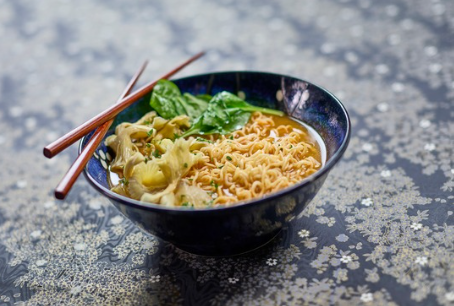
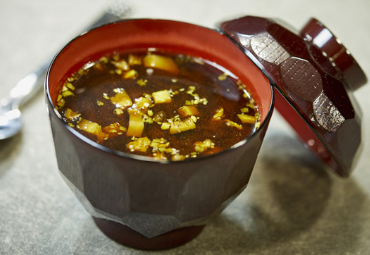
Niboshi dashi is a staple ingredient in many Japanese cuisines, particularly for miso soup, noodle soups (udon, soba, ramen), and simmered dishes (nimono).
Data sheet
Niboshi is a small dried fish, most often baby sardines (more precisely Japanese anchovies or katakuchi-iwashi, but also ma-iwashi or sardines).
Busi and niboshi are the most suitable main ingredients for dashi and soups.
Niboshi, characterized by a light aroma, can be used to make a rich and flavorful dashi.

ALCOHOL ABUSE IS DANGEROUS FOR YOUR HEALTH. CONSUME IN MODERATION. CONSUMING ALCOHOLIC BEVERAGES DURING PREGNANCY, EVEN IN SMALL QUANTITIES, CAN HAVE SERIOUS CONSEQUENCES FOR THE HEALTH OF THE CHILD.


FAQ