





Ref : NISWAKWA2
Bento boxes (or “お弁当” in Japanese) are a way of packing a meal in a suitable container so that it can be eaten later, usually outside the home. The word “bento” actually comes from the verb “bentou,” which means “convenient,” and therefore refers to a convenient way of eating a meal outside the home.
It seems that bento boxes originated in the Kamakura period (1185-1333), invented by farmers and merchants who needed a way to transport their food while they worked. During the Edo period (1603-1868), bento boxes became extremely popular in society as a convenient way to take a meal to work or school.
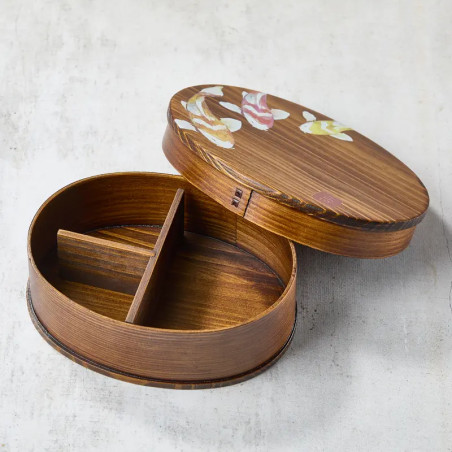
Lacquered wooden bento boxes are traditional Japanese in style. Lacquer technique used is called Urushi. Boxes are coated with several layers of lacquer, making them extremely durable and stain-resistant. These luxurious boxes are often decorated with patterns.
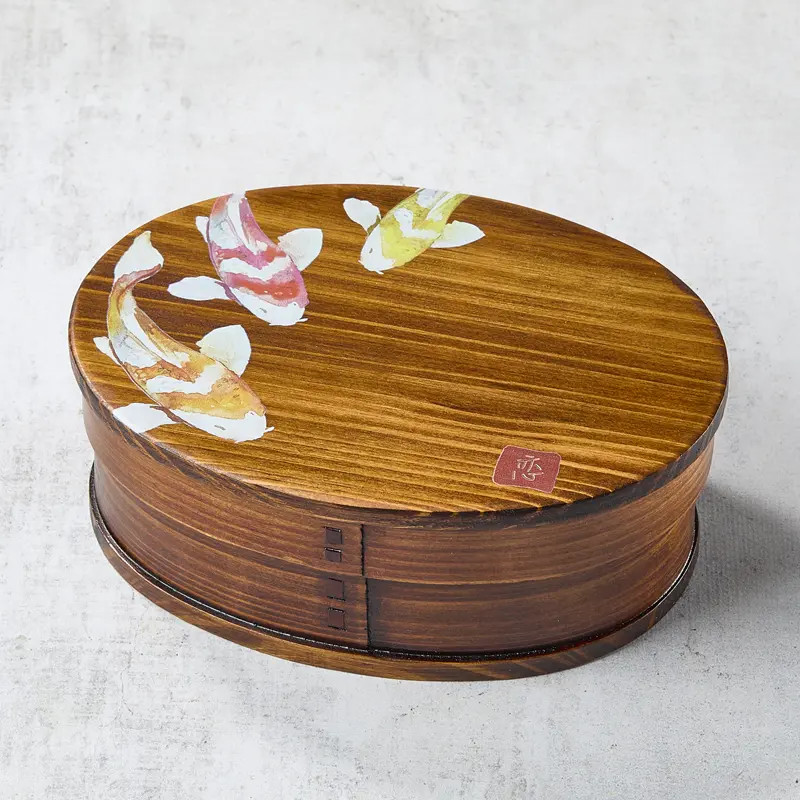
This bento box is decorated with koi carp. In Japanese, “koi” is a homophone for another word meaning “affection” or “love.” Koi are therefore symbols of love and friendship in Japan. This iconic fish also symbolizes courage, perseverance, and bravery. It therefore occupies an important place in Japanese art. It is a highly prized symbol in Japanese culture.
A cultural heritage, this iconic Japanese fish is the pride of the archipelago and especially of the village of Yamakoshi, its birthplace. This fish also appears frequently in Japanese prints and paintings by the great Japanese masters, reflecting the admiration it inspires. In Japan, these carp are called “Nishikigoi” (colored fish) and are bred with passion, particularly in the village of Yamakoshi, which has become their muse.
Koi are known to be a source of peace and serenity in Asian gardens. Spiritually, they embody strength and perseverance in facing life's challenges and moving forward.
Data sheet
 Jean-Claude A.

Satisfactory (Translated review)
Bento boxes (or “お弁当” in Japanese) are a way of packing a meal in a suitable container so that it can be eaten later, usually outside the home. The word “bento” actually comes from the verb “bentou,” which means “convenient,” and therefore refers to a convenient way of eating a meal outside the home.
It seems that bento boxes originated in the Kamakura period (1185-1333), invented by farmers and merchants who needed a way to transport their food while they worked. During the Edo period (1603-1868), bento boxes became extremely popular in society as a convenient way to take a meal to work or school.
Lacquered wooden bento boxes are traditional Japanese in style. Lacquer technique used is called Urushi. Boxes are coated with several layers of lacquer, making them extremely durable and stain-resistant. These luxurious boxes are often decorated with patterns.
This bento box is decorated with koi carp. In Japanese, “koi” is a homophone for another word meaning “affection” or “love.” Koi are therefore symbols of love and friendship in Japan. This iconic fish also symbolizes courage, perseverance, and bravery. It therefore occupies an important place in Japanese art. It is a highly prized symbol in Japanese culture.
A cultural heritage, this iconic Japanese fish is the pride of the archipelago and especially of the village of Yamakoshi, its birthplace. This fish also appears frequently in Japanese prints and paintings by the great Japanese masters, reflecting the admiration it inspires. In Japan, these carp are called “Nishikigoi” (colored fish) and are bred with passion, particularly in the village of Yamakoshi, which has become their muse.
Koi are known to be a source of peace and serenity in Asian gardens. Spiritually, they embody strength and perseverance in facing life's challenges and moving forward.

ALCOHOL ABUSE IS DANGEROUS FOR YOUR HEALTH. CONSUME IN MODERATION. CONSUMING ALCOHOLIC BEVERAGES DURING PREGNANCY, EVEN IN SMALL QUANTITIES, CAN HAVE SERIOUS CONSEQUENCES FOR THE HEALTH OF THE CHILD.


FAQ