




Ref : NISZT-S240
Sukiyaki, a traditional Japanese dish from the "nabemono" (one-dish) family, is said to have originated in the late 19th century in the city of Kobe. However, different, more rudimentary versions dating from the early 19th century use similar processes to cook fish, game birds and seafood.
It consists of thinly sliced beef, leeks, shiitake mushrooms and tofu. The beef is grilled, then boiled in a mixture of soy sauce and sugar in an iron pot. Other ingredients are eaten after the beef, slowly simmered in a sauce called "Warishita". Tasting is recommended after dipping the ingredients in a small bowl of beaten raw egg. As a side dish, it is customary to serve a bowl of steamed rice.
In the days of the Tokugawa shogunate, during episodes of war, many soldiers were given beef to regain their strength for battle. In those days, slices of beef were cooked on plowshares over hot coals.
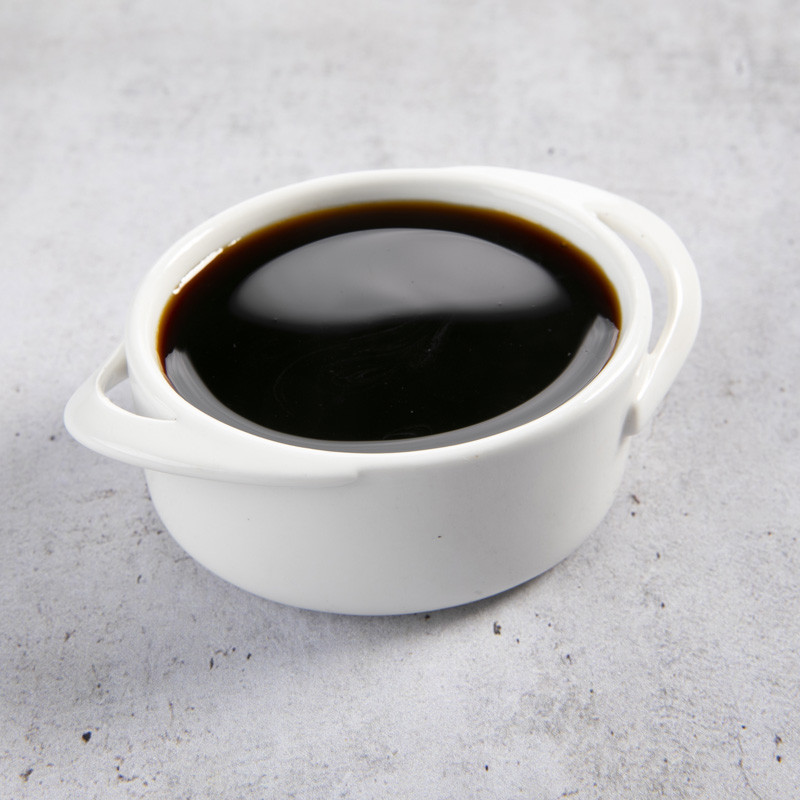
Sukiyaki sauce is generally known as warishita, a mixture of soy sauce, sugar, mirin, sake and other ingredients. Its composition varies from household to household and region to region, but ideal proportion is said to be 1 part soy sauce, 1 part sugar, 1 part mirin, 1 part sake.
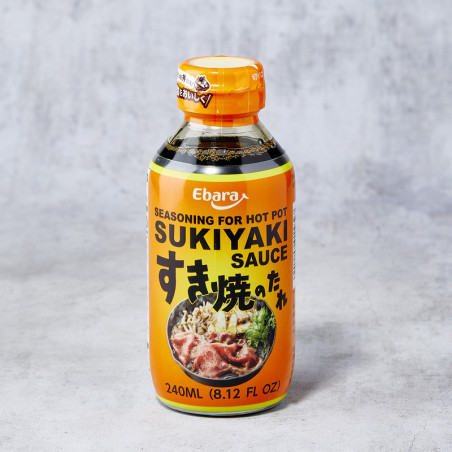
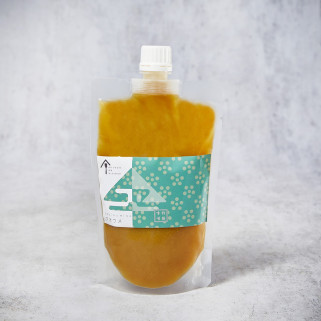
Our sukiyaki no tare sauce is made from quality ingredients. It has a mild, rich, sweet flavor, achieved by combining carefully selected soy sauce, sugar and kombu flavor. No ingredients of animal origin are used. It can be used not only for sukiyaki, but also to prepare delicious dishes using the specified amount of water.
Our tips:
Oyakodon: 1 scoop sukiyaki sauce and 2 scoops water Niku Jaga: 1 scoop of sukiyaki sauce and 3 scoops of water Gyudon or buta don: 2 measures of sukiyaki sauce and 1 measure of water Buta no kakuni: 1 measure of sukiyaki sauce and 2 measures of water Eggs: 1 scoop of sukiyaki sauce and 2 scoops of water (for 4 eggs, place soft-boiled or hard-boiled eggs in a zip-lock bag with 100 ml of sukiyaki sauce and 200 ml of water, pressing out the air, then refrigerate for 12 hours).
Data sheet
 Justine M.

Perfect (Translated review)
KAREN F.
Quality and divine (Translated review)
Sukiyaki, a traditional Japanese dish from the "nabemono" (one-dish) family, is said to have originated in the late 19th century in the city of Kobe. However, different, more rudimentary versions dating from the early 19th century use similar processes to cook fish, game birds and seafood.
It consists of thinly sliced beef, leeks, shiitake mushrooms and tofu. The beef is grilled, then boiled in a mixture of soy sauce and sugar in an iron pot. Other ingredients are eaten after the beef, slowly simmered in a sauce called "Warishita". Tasting is recommended after dipping the ingredients in a small bowl of beaten raw egg. As a side dish, it is customary to serve a bowl of steamed rice.

ALCOHOL ABUSE IS DANGEROUS FOR YOUR HEALTH. CONSUME IN MODERATION. CONSUMING ALCOHOLIC BEVERAGES DURING PREGNANCY, EVEN IN SMALL QUANTITIES, CAN HAVE SERIOUS CONSEQUENCES FOR THE HEALTH OF THE CHILD.


FAQ