




Ref : NISKATO2
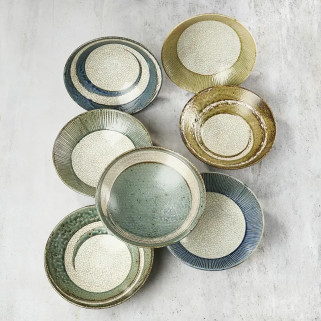
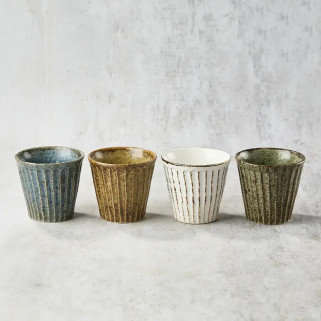
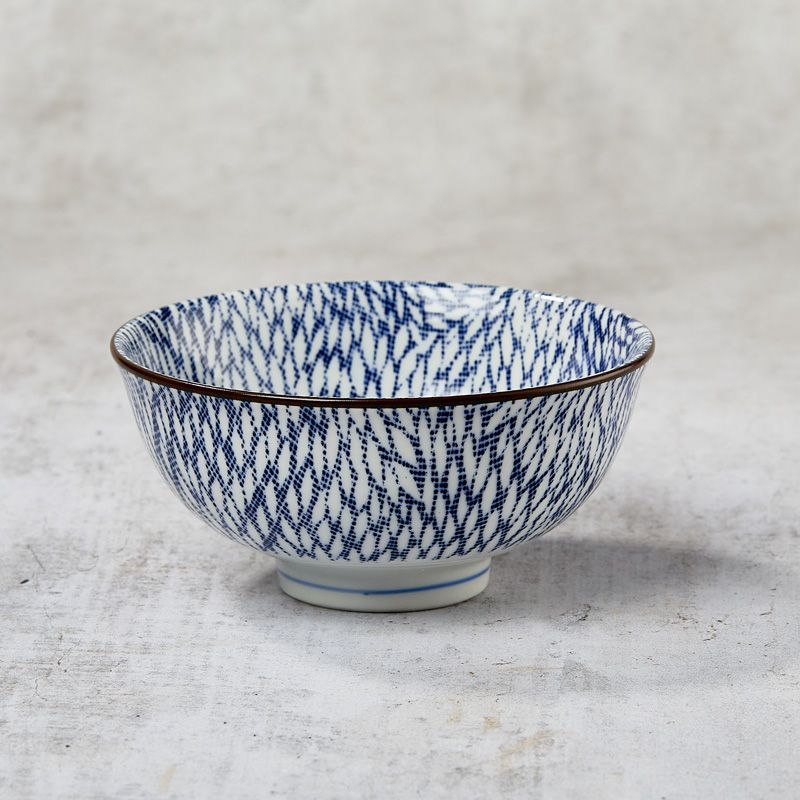
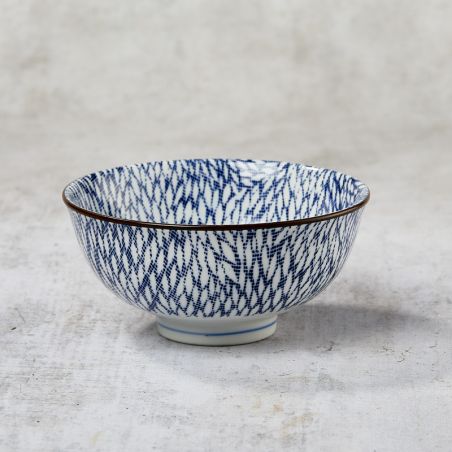
Nakahira is the origin of Japanese harmony. NAKAHIRA bowl is basically a tea bowl. It has been the most basic of tea bowls since ancient times.
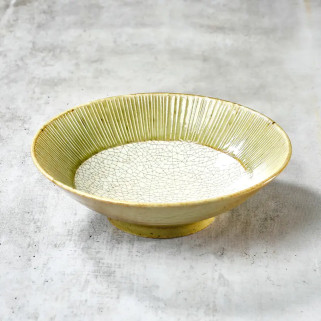
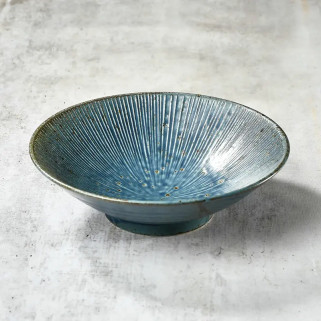
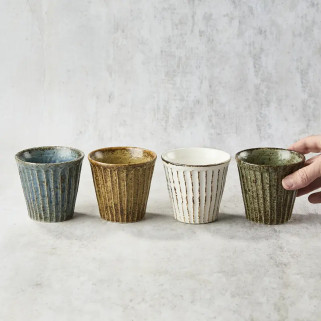
It is characterized by its flared shape and high foot. High foot is also the fruit of ancestors wisdom to make it easy to put your hand in and hold. It's easy to hold even if it's turned upside down during washing.
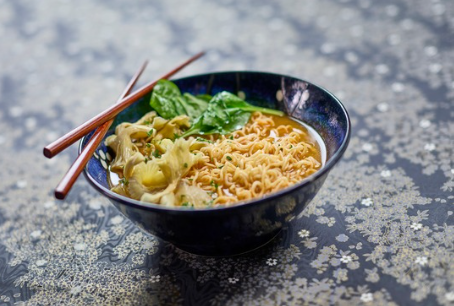
It can be more appetizing to have lots of ingredients in a medium flat bowl, which is slightly smaller than a bowl, than in a bowl containing just a few ingredients. Mishima pattern is a modern interpretation of the floral motif of the Mishima tea bowl.
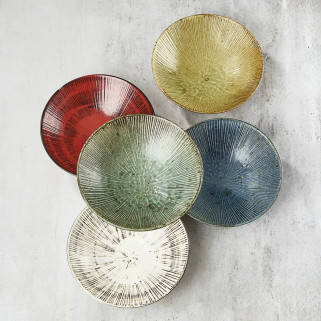
For reference KATO2, design is inspired by a chrysanthemum flower, whose petals overlap and spread out in layers. Name “chrysanthemum” is said to come from the way the petals overlap and spread, resembling the fur of a badger. It is a popular botanical motif, often used in Edo period komon and katazome designs.
Data sheet
 Anne-Marie B.

Pretty, but smaller than I thought. (Translated review)
Manuel D.
Very good (Translated review)
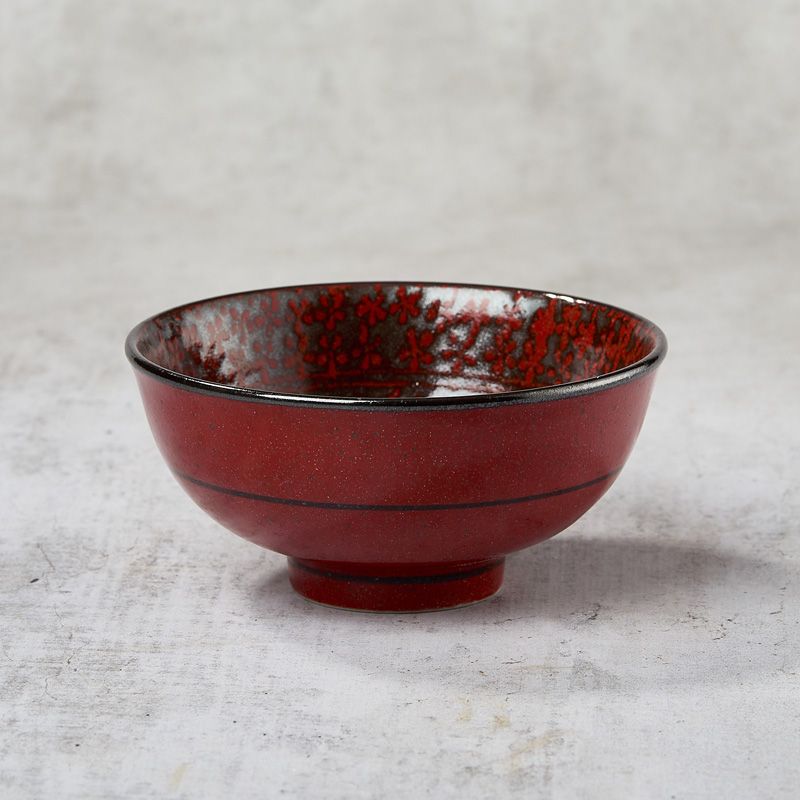
Nakahira is the origin of Japanese harmony. NAKAHIRA bowl is basically a tea bowl. It has been the most basic of tea bowls since ancient times.
It is characterized by its flared shape and high foot. High foot is also the fruit of ancestors wisdom to make it easy to put your hand in and hold. It's easy to hold even if it's turned upside down during washing.
It can be more appetizing to have lots of ingredients in a medium flat bowl, which is slightly smaller than a bowl, than in a bowl containing just a few ingredients. Mishima pattern is a modern interpretation of the floral motif of the Mishima tea bowl.
For reference KATO2, design is inspired by a chrysanthemum flower, whose petals overlap and spread out in layers. Name “chrysanthemum” is said to come from the way the petals overlap and spread, resembling the fur of a badger. It is a popular botanical motif, often used in Edo period komon and katazome designs.

ALCOHOL ABUSE IS DANGEROUS FOR YOUR HEALTH. CONSUME IN MODERATION. CONSUMING ALCOHOLIC BEVERAGES DURING PREGNANCY, EVEN IN SMALL QUANTITIES, CAN HAVE SERIOUS CONSEQUENCES FOR THE HEALTH OF THE CHILD.


FAQ